Samsung gas range and wall oven repair in Todt Hill Staten Island 10304 — Premier Appliance Repair

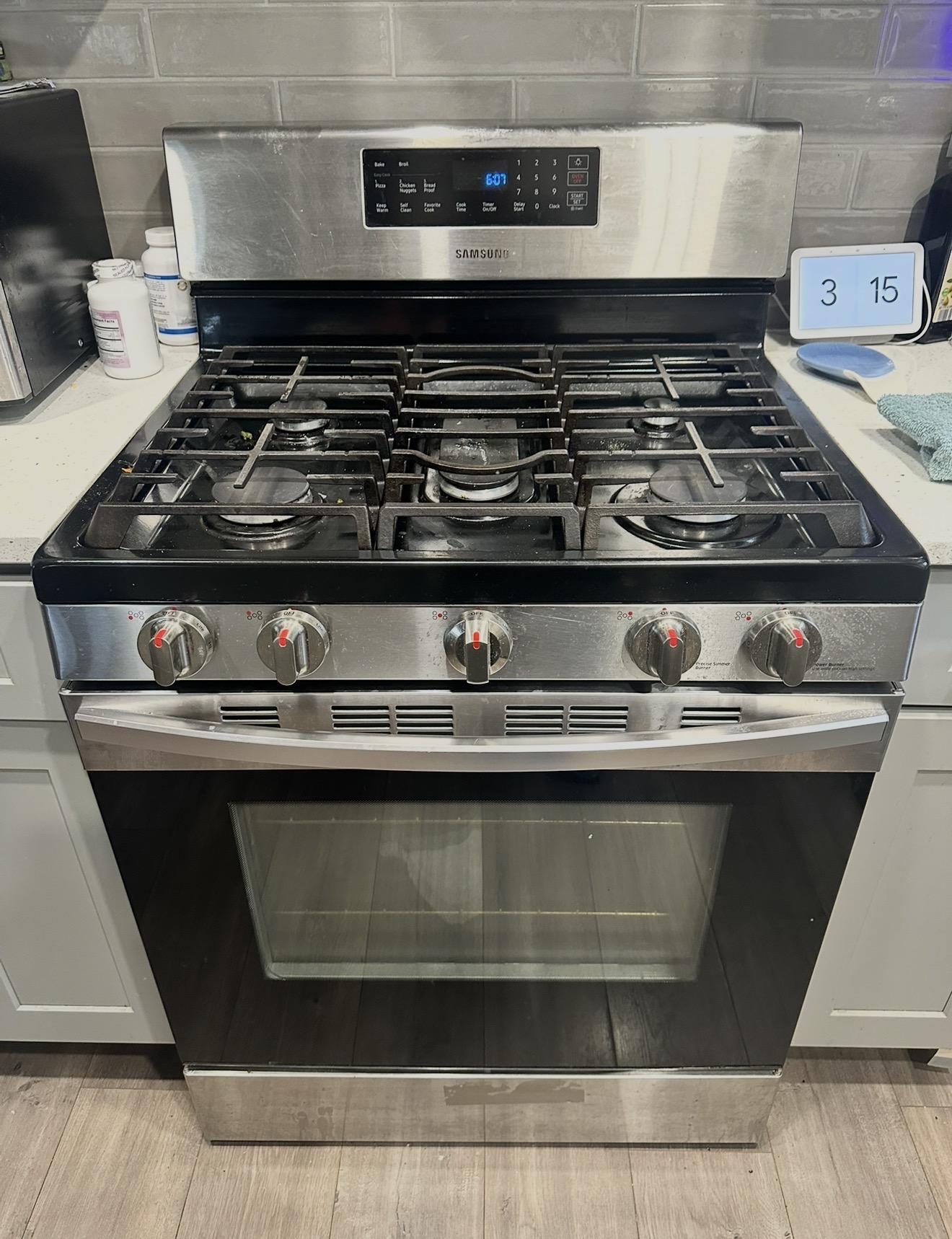
Samsung Oven Not Heating?
Same-day repair · Todt Hill 10304

Oven won't heat · Double oven only one cavity works · Temperature off · Uneven baking · Convection fan loud · Self-clean broke the oven — same-day Samsung wall oven, double oven & range repair in Todt Hill, Dongan Hills & Grasmere

Available Today · 3 appointments in 10304
📅 Book a Same-Day Visit 📞 Call (929) 261-4444

$80 diagnostic · Exact repair price after diagnosis · 90-day warranty

5.0 Google 75+ verified reviews
Licensed & Insured 4+ years experience
90-Day Warranty Parts & labor
Same-Day Service 7 Days a Week

GET A CALLBACK

Tell us what's wrong —
we call back in 15 min

Describe the problem — Badma will call to confirm the likely fix and same-day availability in Todt Hill, Dongan Hills, Grasmere, or Concord.

★★★★★ 75+ Staten Island homeowners trust us on Google
✅ Got it! Badma will call you back within 15 minutes.
⚠️ Something went wrong. Please call (929) 261-4444.
5.0 Google rating across 75+ reviews
$80 Flat diagnostic — applied toward your repair
90d Warranty on every completed repair — parts & labor
Same Day Most 10304 calls diagnosed & repaired in one visit

Samsung Oven Repair — Todt Hill 10304

Why Won't My Samsung Oven Heat? Here's What to Try Before You Call

📍 Todt Hill · Dongan Hills · Grasmere · Concord

"Samsung oven won't heat." "My double oven is broken — only one cavity works." "Oven temperature is off — food keeps burning." "Convection fan is making a grinding noise." "Self-clean ran and now the oven won't heat at all." If you live in Todt Hill, Dongan Hills, or Grasmere, these are the five calls we hear most — and they reflect a specific pattern in how Samsung ovens fail in 10304 that's different from other Staten Island ZIPs. The good news: many of these complaints have simple checks you can run yourself before spending anything on a service call.

If the simple checks don't solve it, that's when you call us. Premier Appliance Repair charges a flat $80 diagnostic to come anywhere in 10304 — whether you're at the top of Todt Hill, on Hylan Blvd through Dongan Hills, or near the Grasmere SIRT station. Badma diagnoses on-site and gives you the exact repair price in writing before starting. If you approve, the $80 applies toward the repair. If you don't, you pay only the $80. The final price depends on your Samsung model and which part failed — we don't guess over the phone, especially on double-oven and wall-oven units where the diagnosis is more complex than a standard single-cavity range.

Safety first — gas smell is not a DIY situation. If you smell gas (and not just a brief whiff when a burner first lights), turn off the range, open windows, do not flip any light switches, and call National Grid at 1-718-643-4050. They respond 24/7 free of charge and will shut off the supply if there's a leak. Only after the gas situation is safe, call us.

Why Todt Hill Sees More Temperature Sensor & Double-Oven Repairs

10304 has Staten Island's largest concentration of single-family homes in the 4,000–7,000 sqft range — Todt Hill at the top of the borough's geological ridge, Dongan Hills along the Hylan Blvd shopping corridor, Grasmere down toward the rail station. The kitchens in these homes are sized for entertaining: many have double wall ovens (Samsung NV51K7770SS, NV51K6650SS, NV51T5511DS), dual-cavity slide-in ranges (FE710DRS, NX60T8711SS), or a wall oven plus a separate cooktop. With heavy daily use, holiday entertaining, and frequent self-clean cycles, the failure profile in 10304 looks different from a single-oven household across the borough.

The most common 10304-specific issue is temperature sensor drift. The oven temperature sensor (DG32-00002B on most Samsung models) is a thermistor — its resistance changes with heat. With cumulative thermal cycling — every preheat, every long bake, every self-clean — the sensor's calibration drifts. In a household using the oven 3 times a week, a sensor lasts 8–10 years before it drifts more than 35°F off and needs replacement. In a Todt Hill household using a double oven 2–3 times a day during entertaining season, the same sensor drifts that far in 4–6 years. The symptom: food consistently burning or undercooking, recipes that used to work suddenly don't, the oven thermometer reads 30–50°F different from the display.

The second most common issue is self-clean damage. Self-clean cycles hit 800–900°F — high enough that the bake element on electric ovens, the door gasket, the door hinges, and even nearby wiring can be damaged. We often arrive to a "Samsung oven won't heat after self-clean" call to find that the bake element on a Samsung NE-series electric range cracked from thermal shock during the cleaning, or that a hinge spring on a heavily-used NX58 lost its tension and the door now hangs slightly open — triggering the auto-shutoff feature. Both are fixable; both happen more often in 10304 because self-clean is used more often here.

The third pattern is "double oven only one cavity works". On Samsung double ovens (wall and slide-in), the upper and lower cavities share some control electronics but have independent igniters or elements, sensors, and door switches. When customers call saying "the upper cavity won't heat but the lower works fine" (or vice versa), it's almost always one of three things: the igniter or bake element specific to that cavity, the temperature sensor for that cavity, or a door switch on that specific door. Diagnosis is more involved than a single-oven call, but the repair is usually straightforward once we know which side failed.

Samsung Oven Won't Heat — Check These Three Things First (No Tools Needed)

Before assuming a part has failed, rule out three "false alarms":

1. Demo mode is on. Especially common on wall ovens after a power surge or a recent kitchen renovation. The display will show "d", "D", "tESt" (or "tE 5t"), or "DEMO". In Demo mode, the controls work but the oven won't heat at all. To exit on most NX58 and NV51 models, hold the Options button and follow the prompt in the user manual.

2. The door wasn't fully closed. Samsung ovens shut off automatically if the door is left open more than about a minute. With heavy entertaining use in 10304, this happens a lot — a roasting pan handle catches the door, the cook walks away thinking the oven is on, and it's actually shut down for the safety timer.

3. The breaker tripped. Check the panel for a breaker labeled "Range," "Oven," or for double ovens, sometimes two breakers. Flip OFF for 30 seconds, then ON. On wall ovens specifically, the breaker is often dedicated 240V — and a half-tripped 240V breaker gives confusing partial-power symptoms.

Samsung Oven Temperature Off — Food Burning or Undercooking

This is the #1 Todt Hill complaint, and it's a sensor drift issue 80% of the time. Diagnostic test:

Step 1: Buy a cheap oven thermometer ($6 at any hardware store). Place it on the middle rack.
Step 2: Set the oven to Bake 350°F. Wait at least 20 minutes for full preheat and stabilization.
Step 3: Open the door briefly, read the thermometer, close the door.

If the thermometer reads within 25°F of 350°F, the oven is functioning correctly — your recipe issue may be elsewhere (rack position, dish material, oven loading). If off by 25–35°F, use Samsung's built-in calibration: on most NX58 and NV51 models, press and hold the Bake button for 3 seconds until an offset value appears on the display. Adjust ±35°F to compensate.

If the thermometer reads more than 35°F off, the temperature sensor has drifted past the calibration range and needs replacement. The sensor (DG32-00002B on most NX58 and NV51 models) is a thermistor probe behind the oven cavity wall — straightforward same-visit repair. On double ovens, we test each cavity separately because they have independent sensors.

Samsung Double Oven — Only One Cavity Works

Specific to 10304's double-oven household pattern. If your Samsung NV51K7770SS, NV51K6650SS, NV51T5511DS, or FE710DRS double oven has one cavity working and the other not heating, the diagnosis depends on which cavity:

Upper cavity not heating, lower works: Most often the bake igniter (gas) or bake element (electric) specific to the upper cavity. Each cavity has its own. Could also be the upper-cavity temperature sensor reading false-high and shutting off heat early, or the upper-cavity door switch reading "open."

Lower cavity not heating, upper works: Same component-by-cavity logic. Lower cavity often has a separate gasket and hinge set worth inspecting if the oven also takes too long to preheat or runs cool.

Both cavities won't heat at all, but display works: Likely an upstream issue — control board relay, breaker, gas supply, or rare wiring fault. Different than a single-cavity issue.

Samsung Oven Won't Heat After Self-Clean

If you ran a self-clean cycle and the oven won't heat anymore, three things are probably involved:

(1) Cracked bake element (electric ovens — NE58, NE59, NE63 series). Self-clean temperatures hit 800–900°F. Bake elements are designed for normal baking temps and aren't always tolerant of self-clean repeated heat shock. After many self-clean cycles, micro-fractures form and one cycle finally cracks the element. Look through the oven window — you may see a visible burn spot or break.

(2) Blown thermal fuse. A safety fuse on the back of the oven trips if the cooling fan didn't keep electronics cool enough during self-clean. Easy replacement.

(3) Damaged door lock motor. The lock that engages during self-clean sometimes fails to release. Symptom: oven won't heat, display may show LE, door is stuck closed.

Heavy entertaining households in Todt Hill run self-clean more often than typical, so this combination of failures is much more common in 10304 than in lower-use ZIPs.

Samsung Convection Fan Loud, Grinding, or Not Running

Convection fan motor wear is another high-usage symptom we see often in 10304. The fan in the back of the oven cavity runs every time you bake on convection mode — and frequent entertaining use means a lot of cumulative motor hours. Symptoms:

Loud or grinding noise: Bearing wear in the fan motor. Will fail completely if not addressed.
Fan won't turn on (convection mode selected): Motor failed open. Often paired with a C-F2 error code.
Fan runs but oven doesn't bake evenly: Fan blade may be loose or warped, not moving enough air.

Convection fan motor is a standard Samsung repair, available for both NX58 ranges and NV51 wall ovens.

Samsung Gas Oven Won't Heat — Igniter Glows but No Flame

Even in heavy-use 10304 kitchens, this is still a common single failure on gas ovens. Test: set the oven to Bake 350°F and watch through the window. Within 30–60 seconds you should see a bright orange glow at the bottom, followed by a blue flame. Three outcomes:

(a) Glow but no flame ever lights. Weak igniter — needs replacement. Bake igniter (DG94-01012A on most NX58 models) is a standard same-visit repair.
(b) Glow takes more than 90 seconds. Samsung says this is a sign of weakening. Replace before complete failure.
(c) No glow at all. Dead igniter, broken wire, or control board relay. Multimeter test: healthy igniter reads 10–2,500 ohms.

Samsung Oven Stuck at 150°F or 175°F — Won't Preheat Higher

Stuck at 150°F: Samsung shows "150°F" during the entire preheat — only updates once the oven actually exceeds 150°F. So a "stuck at 150°F" display means the oven isn't heating. Run the bake igniter glow test above.

Stuck at 175: Often Celsius vs Fahrenheit confusion (175°C = 350°F). Check the panel's units setting. If genuinely stopping at 175°F in Fahrenheit mode, the temperature sensor (DG32-00002B) is drifting — common in 10304 with high usage.

Why We Don't Quote Prices Over the Phone

Two Samsung ovens with "won't heat" can need different parts: a weak igniter, a drifted temperature sensor, a cracked bake element, a control board relay, a door switch. On double ovens the diagnosis is more involved because each cavity has its own components. We don't guess. You pay $80 for the diagnosis, get the exact repair price in writing, and decide whether to proceed. If yes, the $80 is credited toward the repair. If no, you pay the $80 and we leave. Same deal for every customer in Todt Hill, Dongan Hills, Grasmere, and Concord.
Why Choose Premier

Premier vs Samsung Service Center

Factor 🏢 Samsung Service 🔧 Premier Appliance
Arrival in Todt Hill ❌ 5–14 day wait ✅ Same-day
Free phone advice before a visit ❌ Queue & script ✓ Always
Diagnostic fee ❌ $100–150+ ✅ $80, applied
Price quoted before work starts ❌ Not always ✅ Always in writing
Warranty ❌ Varies ✅ 90-day guarantee
Weekend availability ❌ Weekdays only ✅ Mon–Sun

Honest, Transparent Pricing

What a Visit Costs

$0
Hidden Fees
No weekend charge. No trip fee. No double-oven surcharge. No premium-neighborhood pricing. Price quoted before work starts and locked in.
How the repair price is determined: After diagnosis, Badma gives you the exact price in writing. It depends on which part failed and your Samsung model — a bake igniter replacement, spark electrode, spark module, temperature sensor, door lock motor, and control board are all different repairs at different prices. We don't guess over the phone because two ranges with the same symptom can need different parts. You approve the price before any work starts. Every completed repair carries a 90-day parts and labor warranty.

Book Your Visit

Samsung Double Oven, Wall Oven, or Range Won't Heat in Todt Hill or Dongan Hills?

Same-day diagnosis — $80 flat, exact repair price after we see the problem. Badma services NX58, NV51 wall ovens, and FE710 double-cavity slide-ins across all of ZIP 10304.

📅 Book Online Now 📞 (929) 261-4444

Samsung Oven Error Codes & Display Diagnostics

How Heavy-Use Todt Hill Kitchens Generate Different Codes

Large 4,000–7,000 sqft homes in 10304 run double ovens, wall ovens, and frequent self-clean cycles. The display codes you see are weighted toward sensor drift (C-20, C-21) and convection fan wear (C-F2) far more than the borough average.

E-08 / E08 Set Temperature Not Reached in Time

E-08 fires when the oven cannot get to your target temperature inside the expected window. In 10304 with double ovens and frequent use, the cause splits roughly two ways: weak bake igniter on gas ranges, cracked bake element on electric — the latter often after a self-clean cycle that overshocked the element.

  1. Cancel, let cool 15 minutes, restart at Bake 350°F.
  2. For gas ranges: watch for the orange glow within 30–60 seconds and the blue flame ignition behind it. Glow with no flame = weak igniter.
  3. For electric ranges (NE-series): check whether the bake element at the bottom of the cavity glows red across its full length. A dark spot or visible break = cracked element.
  4. Run breaker cycle for 10 minutes between attempts to clear transients.

Bake igniter (DG94-01012A) for gas, bake element for electric — both are same-visit repairs. Call (929) 261-4444 →

C-d0 / C-D0 Phantom Button Press on Touch Panel

The control reads one of the touch buttons as continuously held down. Heavy entertaining means more cooking spatter, more cleaning, more residue working its way under the membrane switch surface.

  1. Wipe the entire touch panel with a damp microfiber cloth. Do not spray cleaner directly on the panel.
  2. Check each button visually — make sure none is cracked, missing, or physically depressed.
  3. Cut breaker power for 5–10 minutes; restore.
  4. Test the panel with a quick bake cycle.

Persistent C-d0 after cleaning and a power cycle means membrane switch failure or a fault on the control board. Call (929) 261-4444 →

C-d1 / C-D1 Door Lock Circuit or Touch Short

C-d1 represents either a touch panel short or a door lock circuit short — the control sees an electrical condition it should not see.

  1. Power off via breaker for 10 minutes; restore.
  2. Inspect the lock motor area through the open door — frequent self-clean use in 10304 wears the lock mechanism faster than typical households.
  3. Verify nothing physical is preventing full door closure — pan handles, oven racks pushed forward, foreign objects.
  4. If C-d1 keeps returning, hardware fix needed — usually the lock motor on heavy-use ovens.

This is a more common 10304 code than in lower-use ZIPs because of the entertaining-driven self-clean frequency. Call (929) 261-4444 →

C-20 / C-21 Temperature Sensor Drift or Open Circuit

C-20 indicates the oven temperature sensor is reporting a value the control considers out of valid range. C-21 is the more serious sibling — over-temperature condition.

This is the #1 code on 10304 ovens 4–6 years old. Cumulative thermal cycling from heavy daily use plus frequent self-clean drives the sensor (a thermistor) past its calibration window faster than in normal-use households.

  1. Power off via breaker for 5 minutes; restore.
  2. If C-20 reappears immediately on power-up before heating starts, the sensor or its wire is the problem.
  3. If C-21 is showing, leave the oven off and call us — that means the oven crossed a safety threshold and should not be used until checked.
  4. For double ovens (NV51, FE710 series), each cavity has its own sensor — note which cavity threw the code.

Sensor (DG32-00002B) replacement is straightforward; on double ovens we test each cavity independently. Call (929) 261-4444 →

C-F0 / CF0 Boards Lost Communication — Power Surge Aftermath

Two control boards inside your range exchange data over a ribbon cable. C-F0 means that connection failed. In 10304 we see this most often after a power outage or surge restored to the home — sensitive electronics in a heavy-use range can be jolted.

  1. Breaker OFF a full 10 minutes. Then back ON.
  2. Wait 2 minutes before touching the panel — both boards need to finish booting.
  3. Set a quick test cycle. Code gone = monitor for recurrence over the next week.

Recurring C-F0 means the ribbon cable needs reseating or the relay board (DG92-01084E) needs replacement. Call (929) 261-4444 →

LE Door Locked After Self-Clean — Will Not Release

Frequent self-clean use in 10304 entertaining kitchens means LE comes up more often here than other ZIPs. The lock engages during self-clean (door cannot open while the oven is at 800–900°F), and sometimes the lock motor fails to disengage after cool-down.

  1. Wait fully. The lock holds until the cavity drops below ~200°F internal — typically 1–2 hours after self-clean ends. Forcing it earlier risks damage.
  2. After 2 hours, if still locked, breaker OFF 10 minutes, ON.
  3. If LE persists after a full cool-down and power cycle, the lock motor itself needs replacement.

For households running self-clean often: lower-temperature manual cleaning extends lock motor and gasket life significantly. Call (929) 261-4444 →

C-F2 / CF2 Convection Fan Motor Fault

C-F2 means the convection fan motor is not turning when the control expects it to. In 10304 this is the second-most-common code we see, after C-20 — heavy convection use accelerates motor bearing wear.

  1. Switch to a non-convection bake. If the oven runs fine without convection, the fault is isolated to the fan.
  2. Listen for grinding, whining, or thumping when convection mode is on. Audible noise = bearing failure stage.
  3. Power cycle 5 minutes to rule out a transient sensor reading from the fan tachometer.

Convection fan motor replacement is standard same-visit repair on NX58 ranges and NV51 wall ovens. Call (929) 261-4444 →

No Code No Display Code but Oven is Not Working

Sometimes the oven simply will not heat (or will not turn on) and the display gives no error code at all. In 10304 the typical causes look like this.

  1. Demo mode active — small "d" or "tESt" text on the display means the controls work but heat is disabled. Common after kitchen renovations or power events. Hold Options to exit.
  2. Door switch reading "open" — on heavy-use ovens with worn hinges, the door can sit microscopically off-square. Press the door switch with your finger to test.
  3. Wall oven breaker only half-tripped — the dedicated 240V breaker can give partial-power weirdness. Cycle fully OFF for 30 seconds, ON.

If none of these explain it, a sensor or igniter that has gone fully open-circuit (rather than reading out-of-range) does not throw a code — Badma diagnoses with a multimeter on-site. Call (929) 261-4444 →

Common Samsung Oven Problems — Todt Hill 10304

Why Won't My Samsung Oven Heat? Common Issues We Fix in 10304

Samsung oven won't heat — burners work, oven stays cold

The most common Samsung gas oven complaint. In 8 out of 10 cases on ovens 3+ years old, it's a weakening bake igniter. Run this test before calling:

  1. Set oven to Bake 350°F. Turn on the oven light. Watch through the window.
  2. Within 30 to 60 seconds you should see a bright orange glow at the bottom of the oven (the bake igniter).
  3. A few seconds after the glow starts, a blue flame should appear behind the igniter.
  4. Glow but no flame, even after a minute = weak igniter. It still glows, but no longer pulls enough current to open the gas safety valve. Needs replacement.
  5. Glow takes longer than 90 seconds = also a weak igniter, per Samsung's own guidance. Replace before it fails completely.
  6. No glow at all, ever = dead igniter, broken wire, or control board relay fault. If breaker is fine, igniter is the most likely cause.

Bake igniter (DG94-01012A on most NX58 models, with variations on others) is a standard Samsung repair — Badma carries common igniters on the truck. Call (929) 261-4444 →

Samsung oven won't turn on — display dark, no response

Different problem from "won't heat" — here the controls are dead too. Power-related. Even a gas oven needs 120V electricity for the controls, igniter, and display.

  1. Check the circuit breaker labeled "Range" or "Oven" in your electrical panel. Sometimes a breaker trips half-off, which gives confusing symptoms.
  2. Cycle the breaker fully OFF for 30 seconds, then back ON. This often clears a stuck control board.
  3. If still dark, pull the range out and check that the plug is fully seated in the wall outlet — over years of vibration, plugs can creep loose.
  4. Try a longer power cycle: breaker OFF for a full 5 minutes, then ON. On older 10307 ovens, sometimes 10 minutes is needed for a complete board reset.

If the display still won't power up, the control board, ribbon cable to the display, or internal power supply has failed — more common on 10307 ovens 10+ years old. Call (929) 261-4444 →

Samsung double oven — only one cavity heats, the other doesn't

Common in Todt Hill and Dongan Hills households with double wall ovens (NV51K7770SS, NV51K6650SS, NV51T5511DS) or dual-cavity slide-ins (FE710DRS). Each cavity has its own igniter or bake element, temperature sensor, door switch, and convection fan. When one cavity stops working but the other is fine, focus on cavity-specific components:

  1. Igniter or bake element for the failed cavity — most common cause. Each cavity is independent.
  2. Temperature sensor for the failed cavity — drift causes early shut-off.
  3. Door switch on the failed cavity's door — if it reads "open" the oven won't heat.
  4. Wiring harness from the main control to that specific cavity — rare but possible.

Tell Badma which cavity is failing (upper or lower) and what mode you tried. Call (929) 261-4444 →

Samsung oven won't heat after self-clean cycle

Especially common in 10304 because heavy entertaining means more frequent self-clean use. Self-clean hits 800–900°F — high enough to damage components if anything was already worn. Three things to check:

  1. Cracked bake element (electric Samsung NE-series only). Look through the oven window — visible burn spot, blister, or break in the element coil at the bottom of the cavity confirms it. Standard same-visit repair.
  2. Blown thermal fuse. A safety fuse on the back of the oven trips if internal electronics got too hot during self-clean. Easy replacement.
  3. Door lock motor stuck. If display shows LE or door is stuck closed, the lock that engaged during self-clean didn't release. Wait 1–2 hours for cool-down first; if still locked, the motor needs replacement.

If you're running self-clean often (2+ times a year), consider lower-temp manual cleaning to extend appliance life. Call (929) 261-4444 →

Samsung convection fan loud, grinding, or won't start

Heavy convection use in 10304 entertaining kitchens accelerates fan motor wear. Symptoms and causes:

  1. Loud or grinding noise: Bearing wear in the fan motor. Will fail completely if not addressed soon. Replace the motor.
  2. Fan won't turn on (convection mode selected): Motor failed open. Often paired with a C-F2 error code. Replace.
  3. Fan rattles or thumps intermittently: Fan blade may be loose on the shaft, or cabinet panel is loose. Tighten or replace blade.
  4. Fan runs but oven doesn't bake evenly: Air not circulating well — usually a deformed blade, debris in the housing, or rack obstruction.

Convection fan motor is a standard same-visit repair on both NX58 ranges and NV51 wall ovens. Call (929) 261-4444 →

Samsung oven stuck at 150°F (or 175°F) preheat — won't go higher

Two very different things show up as this complaint:

  1. Display stuck at 150°F. Samsung ovens display "150°F" during the entire preheat — the number only starts increasing once the actual oven temperature exceeds 150°F. So a "stuck at 150°F" display almost always means the oven is not heating at all. Run the bake igniter glow test in the section above. The fix is usually igniter replacement.
  2. Display stuck at 175. Often this is Celsius-vs-Fahrenheit confusion — 175°C equals 350°F. Check your panel's units setting in the user manual. If your oven is genuinely stopping heat at 175°F (Fahrenheit) and you're set to F, the temperature sensor (DG32-00002B) is drifting badly and needs replacement.

If you're not sure which one applies to you, call (929) 261-4444 and describe what's on the display. Call (929) 261-4444 →

Samsung oven takes too long to preheat / not getting hot enough

If the oven heats but takes 25+ minutes to reach 350°F, or food consistently undercooks/burns:

  1. Buy a cheap oven thermometer ($6 at any hardware store). Set oven to 350°F, wait 20 minutes, then check the thermometer reading.
  2. If actual temp is within 25°F of set, use Samsung's built-in calibration: on most NX58 models, press and hold the Bake button for 3 seconds until an offset value appears. Adjust up to ±35°F.
  3. If actual temp is more than 35°F off, the temperature sensor (DG32-00002B) is drifting — needs replacement.
  4. Check the door gasket — if torn or compressed flat, heat is escaping and preheat will be slow.
  5. A weak bake igniter can also cause slow preheats — even when it lights the burner eventually.

Badma tests sensor, igniter, and gasket to identify which is the real cause. Call (929) 261-4444 →

I smell gas near the range — what do I do?

This is a safety situation — do not try to DIY it. A brief gas smell when a burner first lights is normal. A persistent gas smell when the range is off is not.

  1. Turn all burner knobs to OFF. Make sure nothing is cooking.
  2. Open windows and doors for ventilation.
  3. Do not flip any light switches, use lighters, or plug/unplug anything — a spark can ignite gas.
  4. Leave the house if the smell is strong.
  5. Call National Grid gas emergency at 1-718-643-4050 — 24/7, free service. They come out and shut off the supply if there's a leak.
  6. After National Grid clears the scene and it's safe, call us at (929) 261-4444 to repair the range.

We don't service live gas leaks — that's utility-company work. But once the gas is off and safe, we repair the range part that caused it. Call after the gas situation is safe →

Your Technician

About Badma

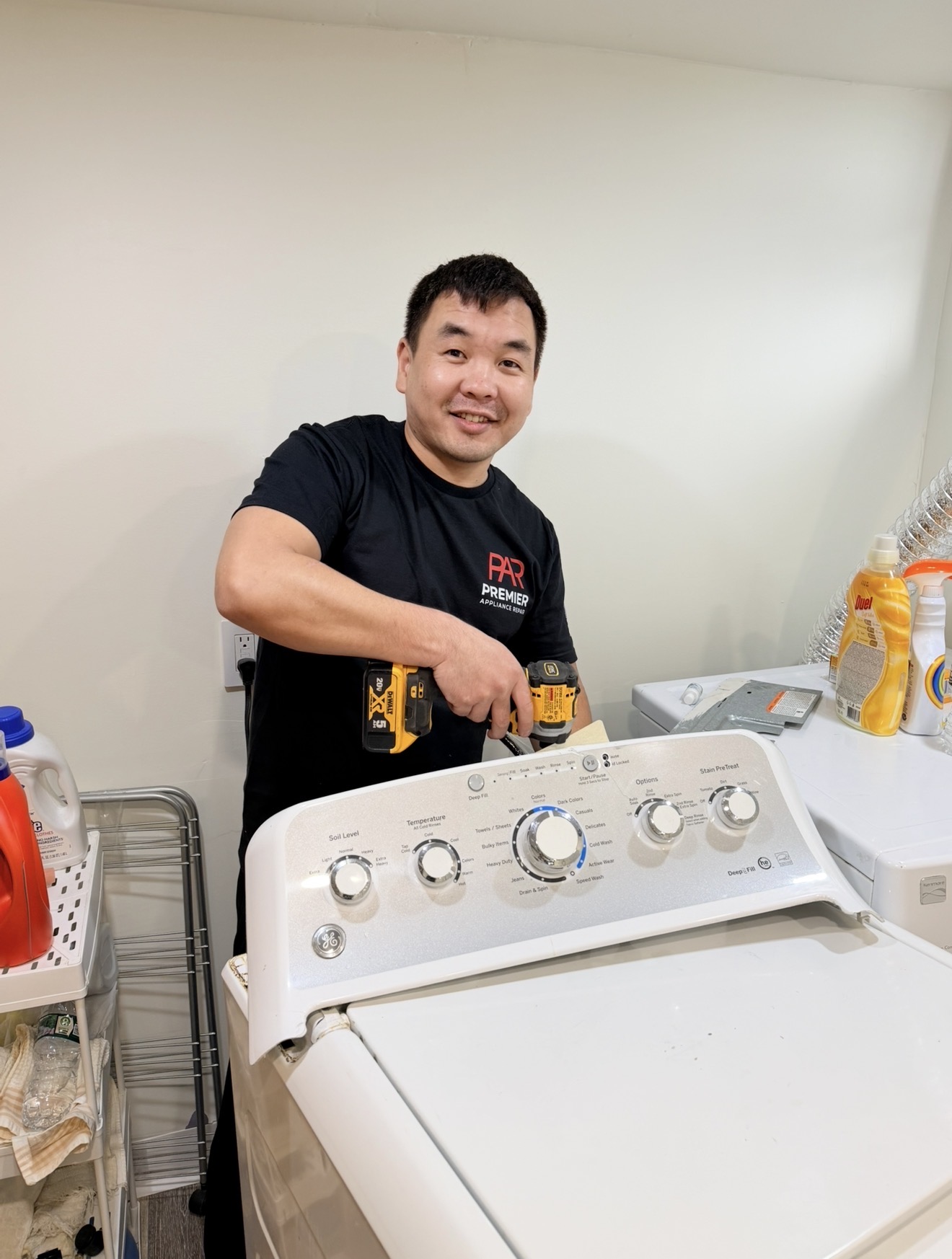
Badma — owner and technician, Premier Appliance Repair Inc
Badma Owner & Technician · Premier Appliance Repair Inc

The Repair Process

How a Samsung Oven Repair Visit Works

1

Call or Book — Share Your Model and Symptom

Call (929) 261-4444 or book online. Share your Samsung range model number (on the label inside the door frame) and a short description of what's happening — the error code, whether the burner clicks, whether you saw the igniter glow. Badma often has specific troubleshooting to try on the phone before scheduling, and some issues get solved in 5 minutes at no cost.

📅 7 Days a Week
2

On-Site Diagnosis — $80 Flat

Badma arrives, inspects the range, and tests the relevant components — bake igniter, spark module, spark electrode, temperature sensor, door lock motor, control board, wiring — to identify exactly what has failed. The $80 covers the visit and the diagnosis regardless of how long it takes.

3

Written Quote — Exact Price Before Any Work

You get the exact repair price in writing — the specific part, its cost, and the labor. If you approve, the $80 diagnostic applies toward the total. If you decide not to proceed, you pay only the $80 and Badma leaves. No pressure, no upsell.

4

Repair Done — Same Visit When Part Is On Truck

Most common Samsung gas range parts — bake igniters, spark electrodes, temperature sensors, door lock motors, common control boards — are on Badma's truck. Special-order parts are ordered and installed on a second visit, typically 1–3 business days. Every completed repair carries a 90-day parts and labor warranty.

🛡️ 90-Day Warranty

Serving Todt Hill & Surrounding Neighborhoods

Todt Hill — ZIP 10304

Samsung gas range, double oven and wall oven repair in Todt Hill, Dongan Hills, and Grasmere Staten Island 10304

Todt Hill sits at the top of Staten Island's central geological ridge — at 410 feet above sea level it's the highest natural point on the Eastern Seaboard south of Maine. The neighborhood is known for large single-family homes ranging from 4,000 to 7,000+ sqft, many built in the 1960s–1990s with substantial kitchens designed for entertaining. Dongan Hills extends east toward the Hylan Blvd shopping corridor with Richmond Rd as its main spine; Grasmere descends toward the SIRT Grasmere station and the lower Hylan Blvd corridor near Brady's Pond; Concord sits between Todt Hill and Stapleton along Targee St. The kitchens in 10304 are characterized by heavy daily use, frequent entertaining, and a high concentration of double wall ovens (Samsung NV51K7770SS, NV51K6650SS, NV51T5511DS) and dual-cavity slide-in ranges (FE710DRS, NX60T8711SS) — meaning the failure profile is dominated by temperature sensor drift, self-clean damage, convection fan wear, and cavity-specific double-oven issues. Badma covers the full area same-day: Ocean Terrace, Todt Hill Rd, Flagg Pl, Benedict Rd, Lighthouse Ave, Richmond Rd, Hicks Ave, Adelphi St, Targee St, Hylan Blvd, and throughout Todt Hill, Dongan Hills, Grasmere, and Concord.
📍 Todt Hill 📍 Dongan Hills 📍 Grasmere 📍 Concord 📍 Ocean Terrace 📍 Todt Hill Rd 📍 Flagg Pl 📍 Richmond Rd 📍 Hicks Ave 📍 Hylan Blvd 📍 Targee St 📍 Lighthouse Ave
CUSTOMER REVIEWS

What Todt Hill & Dongan Hills
homeowners say.

★★★★★

Loading live reviews from Google…

PR
Premier Appliance Repair
5.0 · Google Reviews
View all reviews on Google

Connect With Us

Find Premier Appliance Repair

Frequently Asked Questions

Samsung Oven Questions — Todt Hill 10304

Why is my Samsung oven temperature off — food keeps burning or undercooking?

This is the #1 Todt Hill complaint. In about 80% of cases, the oven temperature sensor (DG32-00002B on most Samsung NX58 and NV51 models) has drifted. The sensor is a thermistor — its resistance changes with heat. With cumulative thermal cycling from heavy daily use, frequent entertaining, and self-clean cycles, the sensor calibration drifts. In a typical 10304 high-usage household, sensors drift past the calibration range in 4–6 years instead of the typical 8–10. Test: buy a $6 oven thermometer, set the oven to 350°F, wait 20 minutes. If off by less than 35°F, use Samsung built-in calibration (hold Bake button 3 seconds for offset adjustment ±35°F). If off by more, the sensor needs replacement. Standard same-visit repair.

My Samsung double oven — only one cavity heats, what is wrong?

Specific to 10304 double-oven household pattern. On Samsung double wall ovens (NV51K7770SS, NV51K6650SS, NV51T5511DS) and dual-cavity slide-in ranges (FE710DRS), each cavity has independent components — its own igniter or bake element, temperature sensor, door switch, and convection fan. When one cavity fails: most common cause is the igniter (gas) or bake element (electric) for that cavity. Could also be the temperature sensor for that specific cavity reading false-high and shutting off heat early, or the door switch on that door. Tell Badma which cavity (upper or lower) and what mode you tried — that helps narrow the diagnosis before he arrives.

My Samsung oven won't heat after a self-clean cycle. What broke?

Common in 10304 because heavy entertaining means frequent self-clean use. Self-clean hits 800–900°F. Three things commonly fail: (1) Cracked bake element on electric Samsung NE-series — visible burn spot or break in the element through the oven window. (2) Blown thermal fuse — a safety fuse on the back of the oven trips if internal electronics overheated during self-clean. Easy replacement. (3) Door lock motor stuck (display shows LE or door won't open). Wait 1–2 hours for cool-down before assuming the lock failed. If still locked, motor needs replacement. Recommendation for high-use households: lower-temp manual cleaning extends appliance life vs frequent self-clean.

Why won't my Samsung oven heat at all?

On Samsung gas ovens (NX58 series), the most common cause is a weak bake igniter — it still glows orange but no longer pulls enough current to open the gas safety valve. Test: set Bake 350°F and watch through the oven window. Within 30–60 seconds you should see an orange glow followed by a blue flame. Glow but no flame = weak igniter, needs replacement (DG94-01012A on most NX58 models). Other quick checks: make sure Demo mode isn't on (display shows 'd' or 'tESt'), the door is fully closed, and the breaker isn't tripped. On wall ovens specifically, the breaker is dedicated 240V — check both sides if it tripped half-off. On Samsung electric ovens (NE-series), bake element is the most common cause, often after a self-clean cycle.

Why is my Samsung convection fan loud, grinding, or not running?

Convection fan motor wear is common in 10304 entertaining kitchens with heavy convection use. Symptoms: (1) Loud or grinding noise = bearing wear in the fan motor, will fail completely if not addressed. (2) Fan won't turn on with convection mode selected = motor failed open, often paired with C-F2 error code. (3) Rattles or thumps = loose fan blade on the shaft. (4) Runs but bakes unevenly = deformed blade or debris in the housing. Convection fan motor replacement is a standard same-visit repair on both NX58 ranges and NV51 wall ovens.

Why does my Samsung oven take so long to preheat?

Three common causes, especially in 10304 heavy-use kitchens: 1) Drifting temperature sensor (DG32-00002B) — the oven shuts off heat early on a false reading. Verify with a $6 oven thermometer; off by more than 35°F = sensor needs replacement. 2) Worn door gasket — heat is escaping. Inspect the seal around the oven opening for tears or compression. With heavy daily use, gaskets in 10304 wear out faster than typical. 3) Weak bake igniter — even when it lights the burner, a weak igniter cycles the gas valve open inefficiently, slowing preheat.

Why is my Samsung oven stuck at 150°F or 175°F preheat?

Samsung ovens display "150°F" during the entire preheat — the number only starts climbing once the oven actually exceeds 150°F. So a "stuck at 150°F" display almost always means the oven isn't heating at all (most often a weak bake igniter on gas, or cracked bake element on electric). Run the bake igniter glow test: set Bake 350°F and watch for the orange glow within 30–60 seconds. For "stuck at 175": check whether your panel is set to Celsius (175°C = 350°F, a common false alarm). If genuinely stopping at 175°F in Fahrenheit mode, the temperature sensor (DG32-00002B) is drifting and needs replacement.

How much does Samsung wall oven or double oven repair cost in Todt Hill?

The diagnostic is $80 flat — same as for a standard single oven, no double-oven or wall-oven surcharge. Covers the trip to your Todt Hill, Dongan Hills, Grasmere, or Concord home, full on-site diagnosis (including testing each cavity separately on double ovens), and a written quote. After diagnosis, the repair price depends on which part failed and your Samsung model. Wall oven and double oven repairs sometimes use slightly different parts (cavity-specific igniters, sensors, fans) but our pricing structure is the same. You get the exact price in writing before any work starts. If you approve, the $80 applies toward the total. If not, you pay only the $80 and Badma leaves.

I smell gas near my range — what should I do first?

Do NOT try to fix this yourself. Turn off the range. Open windows. Don't flip any light switches or use lighters. Call National Grid 24-hour gas emergency line at 1-718-643-4050 — they come out free and will shut off supply if there is a leak. Only after National Grid clears it and the area is safe, call us at (929) 261-4444 to repair the range part that caused the issue. We don't service live gas leaks — that is utility-company work. Once the gas is safe, we fix the appliance.

Do you service all of Todt Hill, Dongan Hills, and Grasmere?

Yes — the full 10304 ZIP. Todt Hill at the top of the borough geological ridge — Ocean Terrace, Todt Hill Rd, Flagg Pl. Dongan Hills along the Hylan Blvd shopping corridor, Richmond Rd, Hicks Ave. Grasmere down toward the SIRT railway station and Hylan Blvd. Concord between Todt Hill and Stapleton. Same-day service 7 days a week: Mon–Sat 8am–7pm, Sun 9am–5pm. Same diagnostic price and same warranty regardless of where in 10304 you are or which Samsung model you have.

Ready to Fix It

Samsung Oven, Wall Oven, or Double Oven Acting Up in Todt Hill? Try the DIY Steps First — Then Call Us

Same-day service across ZIP 10304. $80 diagnostic, exact repair price after we see the problem, 90-day warranty on every completed repair.

Taking appointments today
📅 Book a Same-Day Visit 📞 Call (929) 261-4444