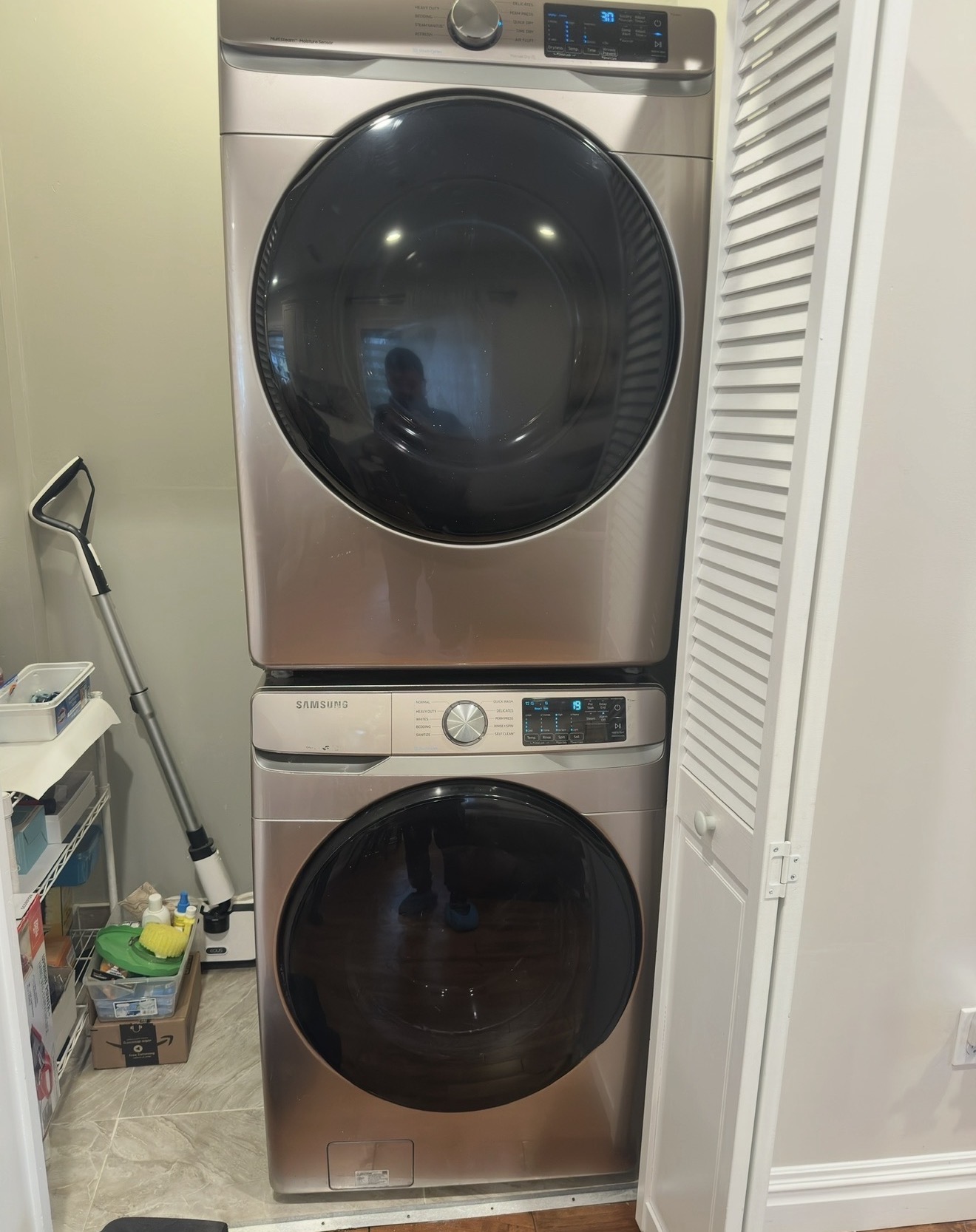
Samsung Dryer Repair
in Princes Bay.
tC thermistor error from Raritan Bay basement humidity and connector oxidation — diagnosed and fixed same-day in 10309.
tC thermistor error from Raritan Bay basement humidity and connector oxidation — diagnosed and fixed same-day in 10309.
$80 service call · Applied to your repair · Price quoted before any work starts
Why Princes Bay & Pleasant Plains residents call us for Samsung dryer repair:
Most Samsung dryer faults in this series trace to mechanical wear, vent restriction, or heating component failure. The fault that comes up regularly in 10309 is different in kind: it's an electronic fault caused by the environment the dryer lives in. Pleasant Plains and Princes Bay sit along the southwestern edge of Staten Island, with Princes Bay directly facing the Raritan Bay and Pleasant Plains running inland along Woodrow Road toward the tidal wetlands that separate Staten Island from the New Jersey shore. Many homes in both neighborhoods have basement laundry rooms — and those basements are not air-conditioned, rarely dehumidified, and persistently exposed to the moisture that rises from the water table and drifts in from the bay.
A Samsung dryer uses thermistors — resistance-based temperature sensors — to monitor the temperature of air entering and leaving the drum. The exhaust thermistor clips to the duct inside the dryer cabinet and connects to the control board through a multi-pin wiring harness. The connector between the thermistor and the harness is a small plastic housing with metal pin contacts — typically tin-plated copper — that are designed for a dry indoor environment. In a Princes Bay or Pleasant Plains basement that stays at consistently elevated relative humidity through spring and summer, those metal pins begin to oxidize. The oxidation layer isn't visible — it forms at the microscopic level on the pin surface — but it adds electrical resistance to the circuit. The Samsung's control board reads that added resistance as a thermistor value outside the expected range and throws tC or tC1.
The thermistor itself is often fine. The sensor's resistance — measured directly, bypassing the connector — falls within specification. But with the connector in the circuit, the added resistance from the oxidized pins pushes the reading out of range. Replacing the thermistor without addressing the connector puts a new sensor in front of the same oxidized contacts. The new sensor reads correctly initially because its fresh pin contacts have lower surface resistance, keeping the total circuit reading within range — but as the harness-side oxidation continues to build, the total resistance eventually crosses the Samsung's detection threshold again and tC returns. We test the thermistor directly first — disconnected from its harness — then inspect the connector pins under the original circuit conditions. That sequence determines whether the sensor, the connector, or both need attention.
Princes Bay properties close to the water — along Seguine Avenue, Hylan Boulevard near the bay, and the residential streets running toward the marina — have basements that stay humid through most of the year. The direct bay exposure keeps ground moisture elevated even in dry summer stretches. Pleasant Plains homes further inland along Woodrow Road and Sharrott Avenue experience the same humidity but with a slight seasonal lag — basement humidity peaks a few weeks later in summer and drops a bit sooner in fall. The practical difference for Samsung dryers: Princes Bay tC calls appear earlier in the season and more consistently year over year. Pleasant Plains tC calls are slightly less predictable — the code may appear one summer and not the next, depending on rainfall and the water table that season.
Samsung's Smart Care app, when presented with a tC code, points toward the thermistor as the likely failed component. That's the correct first hypothesis — but it's only correct if the thermistor is tested directly and found out of spec. In 10309, the thermistor tests within range when measured properly. The correct diagnosis requires testing the sensor in isolation, then reassembling the circuit and testing again with the connector engaged. The resistance difference between the two readings quantifies the connector's contribution to the fault. We follow this sequence on every tC call in this area before recommending any parts replacement.
| 🏢 Samsung Service Center | 🔧 Premier Repair | |
|---|---|---|
| Arrival time | 5–7 business days | ⚡ Same day |
| Weekend service | ❌ No | ✅ 7 days a week |
| Price before work starts | ❌ Often not | ✅ Always upfront |
| Connector inspected before replacing thermistor | ❌ Thermistor replaced first | ✅ Connector tested first |
| Arrival in 10309 | Scheduled weeks out | ✅ South Shore regular route |
| 90-day warranty | Parts only, varies | ✅ Parts & labor |
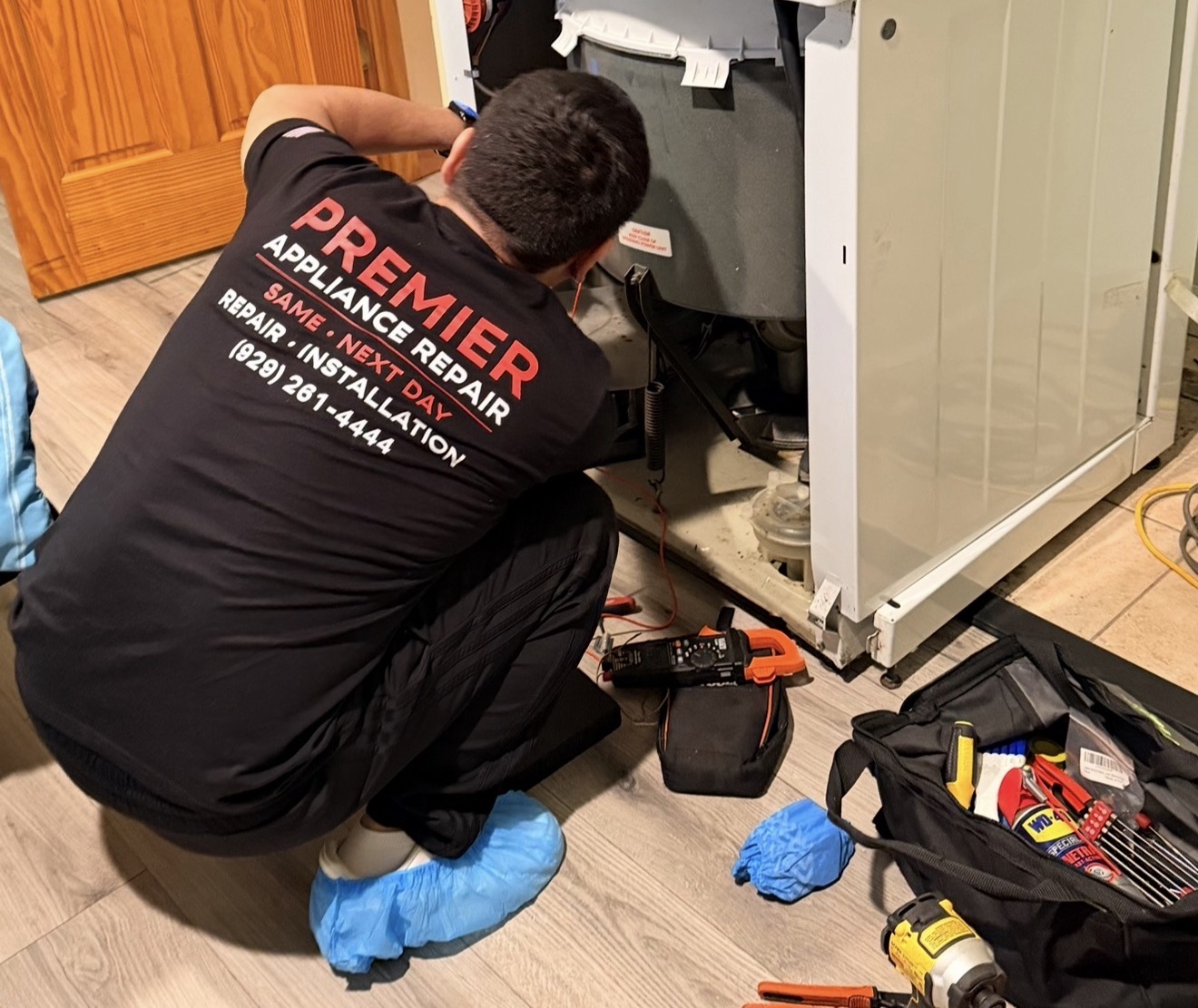
Internal component inspection during a 10309 tC call — the thermistor harness connector and the surrounding wiring are assessed for oxidation before any parts are replaced.
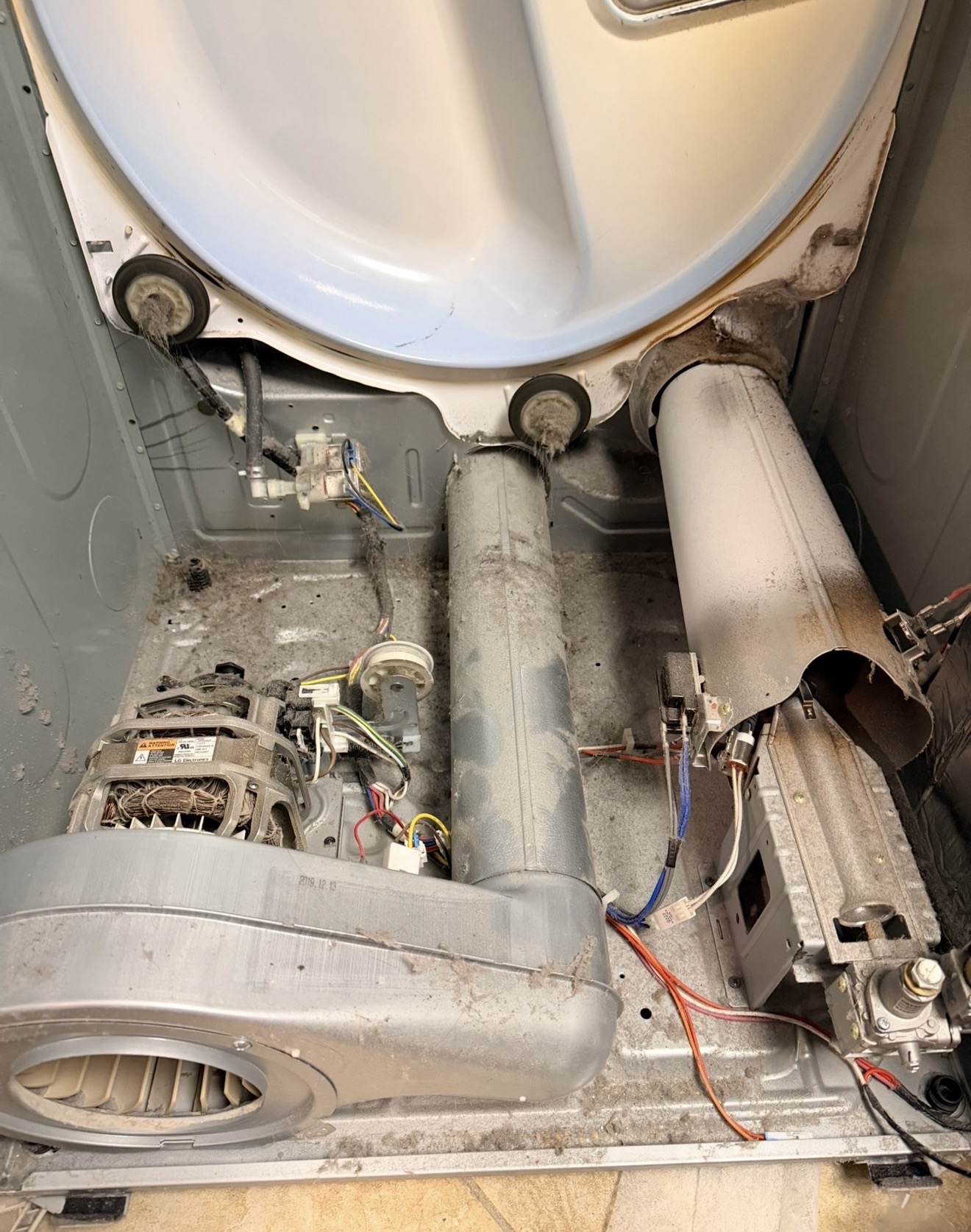
Internal harness inspection — Princes Bay tC call
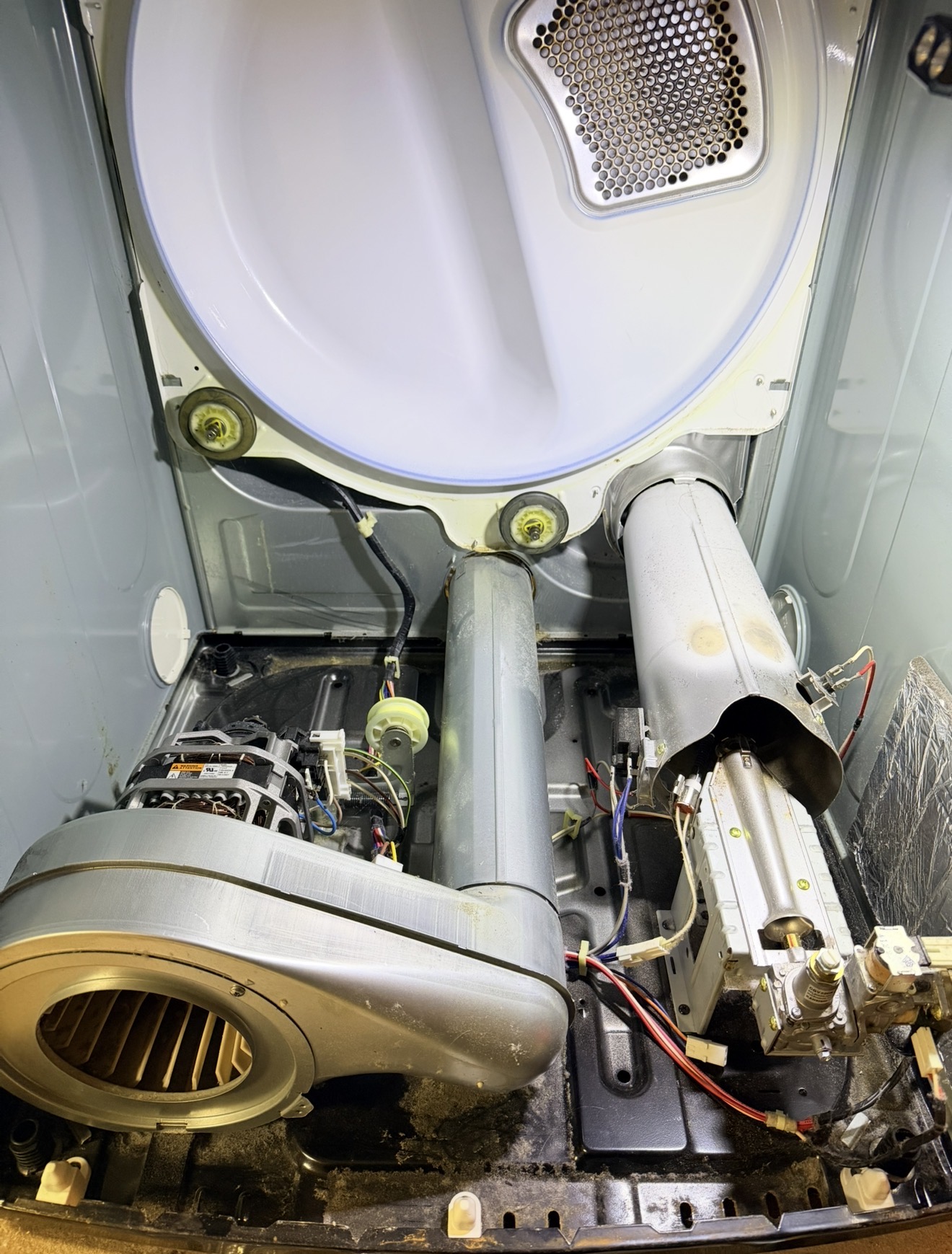
Sensor circuit assessment — Pleasant Plains service call
The $80 covers travel, thermistor resistance test, connector inspection, vent assessment, and a written quote before any work begins. For 10309 tC calls, we test the sensor in isolation before testing with the connector engaged — the difference between the two readings determines whether the thermistor, the connector, or both need attention.
Connector first, thermistor second — that's the sequence for 10309 coastal basement calls. We test both in isolation before quoting any parts replacement.
📅 Book Online Now 📞 Call (929) 261-4444Five Samsung dryer error codes that come up regularly in 10309. tC / tC1 is open by default — the primary fault in coastal basement environments of this area.
tC or tC1 means the exhaust thermistor circuit returned a reading outside the expected range. In 10309 basement laundry rooms, this fault regularly traces to oxidized connector pins rather than a failed thermistor. The correct diagnostic sequence is to test the thermistor resistance directly — disconnected from its harness — then test again with the connector engaged. A normal reading in isolation but an out-of-range reading through the connector confirms the connector is the source.
Et means the exhaust thermistor circuit is completely open — no reading at all, as opposed to tC's out-of-range reading. In 10309, Et is the advanced stage of the same connector oxidation that causes tC: the pin contact has corroded through entirely, or the harness wire has developed a break from repeated flexing in a humid environment. We inspect the full harness length and all connector points before concluding the thermistor itself has failed — a broken harness wire produces an identical Et code to a physically broken sensor.
📞 Call (929) 261-4444HC or HC1 can appear in 10309 alongside tC faults in basements where the same humidity that corrodes connector pins also accelerates lint adhesion in the exhaust duct. Check the exterior vent cap before calling — locate it on the side or rear of the house, press the flap fully open, and clear any visible lint. If HC1 clears and tC persists, the duct is not the primary issue. If both codes appear together, we assess the vent from the dryer end and inspect the thermistor connector on the same visit.
📞 Call (929) 261-4444HE or HE1 means the heating circuit failed to reach operating temperature. In 10309, HE can appear when a persistent tC fault causes the Samsung to shut down the heating circuit as a protective measure — the dryer won't heat if the thermistor circuit is reading an error, since it relies on the sensor to regulate drum temperature. If tC clears and the dryer still shows HE or runs cold, the heating element and thermal fuse need independent testing.
📞 Call (929) 261-4444dF means the door switch isn't confirming the door is fully latched. In the below-grade basement laundry rooms common in Princes Bay homes, the dryer sometimes sits in a low-clearance space where the door swings toward a wall — owners pull it at an angle when loading, gradually wearing the latch strike. Check whether the door clicks firmly into place. If the door closes but dF persists, the door switch assembly needs replacement.
📞 Call (929) 261-4444When tC1 returns a few months after a thermistor replacement, the connector was the source of the fault and was never inspected. The new thermistor tested correctly through fresh pin contacts initially, but the existing oxidation on the harness-side pins progressed until it pushed the new sensor's circuit reading out of range. We inspect the connector on every tC call regardless of whether a thermistor has been replaced previously — in 10309 basement environments, the connector is the first component to evaluate.
Basement humidity in 10309 peaks from late spring through early fall as the Raritan Bay evaporates at its highest rate. During this period, oxidation on connector pins progresses fast enough to push the thermistor circuit out of range. In winter, the basement dries slightly and the contact resistance may drop back below the Samsung's detection threshold. The seasonal tC pattern is a diagnostic indicator that the connector needs cleaning before the oxidation reaches the point where it triggers tC year-round.
When a connector oxidation fault is intermittent — the pin contact is marginal rather than fully degraded — the Samsung may detect an out-of-range thermistor reading mid-cycle and shut down as a protective measure without displaying a persistent code. The dryer stops, power-cycling it restores operation, and it runs normally for a while before stopping again. This pattern appears before tC1 becomes a consistent displayed code and is an early sign that the connector needs attention.
In basement laundry rooms with elevated humidity, the Samsung's Sensor Dry moisture bars — two metal strips inside the drum that measure fabric moisture conductivity — can accumulate a film of fabric softener residue and lint coating over time. The film reduces the bars' conductivity, causing the dryer to read fabric as wetter than it is and run longer cycles. Separately, if the coating builds thickly enough to insulate the bars, the dryer may end cycles early instead. We clean the moisture sensor bars on every 10309 tC call as part of the complete assessment.
Call (929) 261-4444 or book online. Mention the tC or Et code, whether it appeared seasonally, and whether the dryer is in a basement laundry room. This helps us prepare the correct diagnostic approach before arrival.
⚡ Same-day in Princes Bay & Pleasant PlainsThe thermistor is tested disconnected from its harness. If the sensor is in spec, the connector pins and harness are inspected for oxidation. If the sensor is out of spec, it's noted — but the connector is still inspected regardless. You receive a written quote for any parts before work begins.
The connector is cleaned or replaced based on what the inspection found. If the thermistor itself has drifted out of specification, it's replaced on the same visit. The Sensor Dry moisture bars are cleaned as part of the complete assessment.
🔍 Connector inspected before thermistor replacedThe thermistor circuit is tested with all connections engaged before closing up. The dryer runs a full cycle. You receive a 90-day parts and labor warranty. tC returns within 90 days? We come back at no charge.
Access in 10309 varies by property type. Pleasant Plains homes along Woodrow Road and Sharrott Avenue are typically single-family with basements accessed from an interior stairway — straightforward. Princes Bay properties closer to the water sometimes have narrower lots with side-access driveways and basement entrances that open onto the yard rather than into the house. Waterfront properties on Seguine Avenue occasionally have the laundry in a lower-level utility room that opens to the rear of the property. If the laundry room access isn't through the front door, mention it when booking.
10309 is on the South Shore route. Same-day service, no distance surcharge. If your basement has no dehumidifier and the tC code has appeared before, mention the humidity level when you book — it helps us anticipate what the connector inspection will find.
"tC1 kept coming back on our Princes Bay Samsung. Badma tested the thermistor directly — completely in spec. The connector pins were oxidized from the basement humidity. He cleaned the connector, code cleared. No thermistor replaced, no unnecessary parts. That's the right diagnosis."
"Thermistor was replaced last summer and tC1 came back this June. Badma explained what had happened — the connector was never inspected and the oxidation progressed to the new sensor's contacts. Cleaned and replaced the connector harness this time. Explained about a dehumidifier too."
"Et code on our Pleasant Plains dryer — much more serious than the tC code we'd seen before. Badma found the connector pin had corroded completely through. Replaced the harness connector same-day. Explained the progression from tC to Et clearly. Very professional."
"tC1 every summer, fine every winter. Badma explained the seasonal bay humidity pattern perfectly. Cleaned the connector, told us the oxidation would return without a dehumidifier in the basement. Got a dehumidifier that fall — no tC the following summer."
"Dryer kept stopping mid-cycle with no code shown. Badma diagnosed it as intermittent connector oxidation — the marginal contact was causing protective shutdowns before tC1 became consistent. Cleaned the connector and it's been running without interruption since."
"Samsung Smart Care flagged the thermistor as likely failed. Badma tested it directly and it was fine — connector pins were the actual problem. Fixed without replacing the thermistor at all. Smart Care gives you the category right but not the root cause in coastal basement environments."
"Called for tC, Badma also noticed the Sensor Dry bars had a mineral film from the basement air. Cleaned them while he was there — drying time improved noticeably. Appreciated the thorough approach. No issues since."
tC or tC1 means the Samsung's exhaust thermistor circuit returned a reading outside its expected range. In Princes Bay and Pleasant Plains basement laundry rooms, this code regularly traces to oxidized connector pins on the thermistor harness rather than a failed sensor. Persistent Raritan Bay humidity enters the connector housing and oxidizes the metal pin contacts, adding resistance to the circuit that the Samsung reads as an out-of-range thermistor value. We test the sensor in isolation first, then inspect the connector — the sequence that determines whether the thermistor, the connector, or both need attention.
In many 10309 calls, yes. If the thermistor tests within its resistance specification when measured directly — disconnected from its harness — and the added resistance is coming from oxidized connector pins, cleaning the contacts resolves the tC code without replacing the sensor. We test the sensor in isolation first, then with the connector engaged, and quote only what actually needs attention.
Yes — that seasonal pattern is consistent with Raritan Bay humidity driving connector oxidation. Basement humidity peaks in summer, oxidation progresses faster during those months, and the contact resistance crosses the Samsung's detection threshold. In winter, humidity drops and the resistance may fall back below the threshold. Cleaning the connector before the summer peak prevents the fault from appearing, or progressing to the more severe Et code where the pin has corroded completely through.
tC and tC1 mean the thermistor circuit returned an out-of-range reading — the connection is degraded but still present. Et means the circuit is completely open — no signal at all — typically because the connector pin has corroded through entirely or the harness wire has broken. Both codes share the same root cause in 10309 basement environments; Et is the advanced stage. We inspect the full harness and connector on both tC and Et calls.
10309 is on the South Shore route. After booking or calling, we confirm the arrival window — typically same-day. Princes Bay waterfront properties sometimes have side or rear basement access — mention the setup when you book. Mon–Sat 8am–7pm, Sun 9am–5pm, no weekend surcharge.
Yes. The $80 covers travel, thermistor resistance test in isolation, connector inspection, vent assessment, and a written quote. If you approve the repair, it applies toward the total. If you choose not to proceed after seeing the quote, you pay the $80 only. Work never starts without your go-ahead.
All major Samsung electric and gas dryer models: DV45T6200 series, DV50R5200 series, DV42H5200 series, DVG45T6200 gas models, DV25BB6900H Bespoke series, and DV6500 FlexDry. Call (929) 261-4444 with your model number to confirm before booking.
90-day parts and labor warranty on every repair. If tC1 returns or any replaced component fails within 90 days, we come back at no charge. For connector-related repairs in 10309 basement environments, we note the oxidation level observed — if tC returns within the warranty period, that record helps assess whether the basement humidity has accelerated further oxidation on adjacent harness connections.
tC1 from Raritan Bay connector oxidation, Et from a corroded-through harness pin, seasonal summer fault in a Princes Bay basement — we're on the South Shore route and can be at your door on Woodrow Road, Seguine Avenue, or anywhere in 10309 same-day. Connector inspected before thermistor replaced.