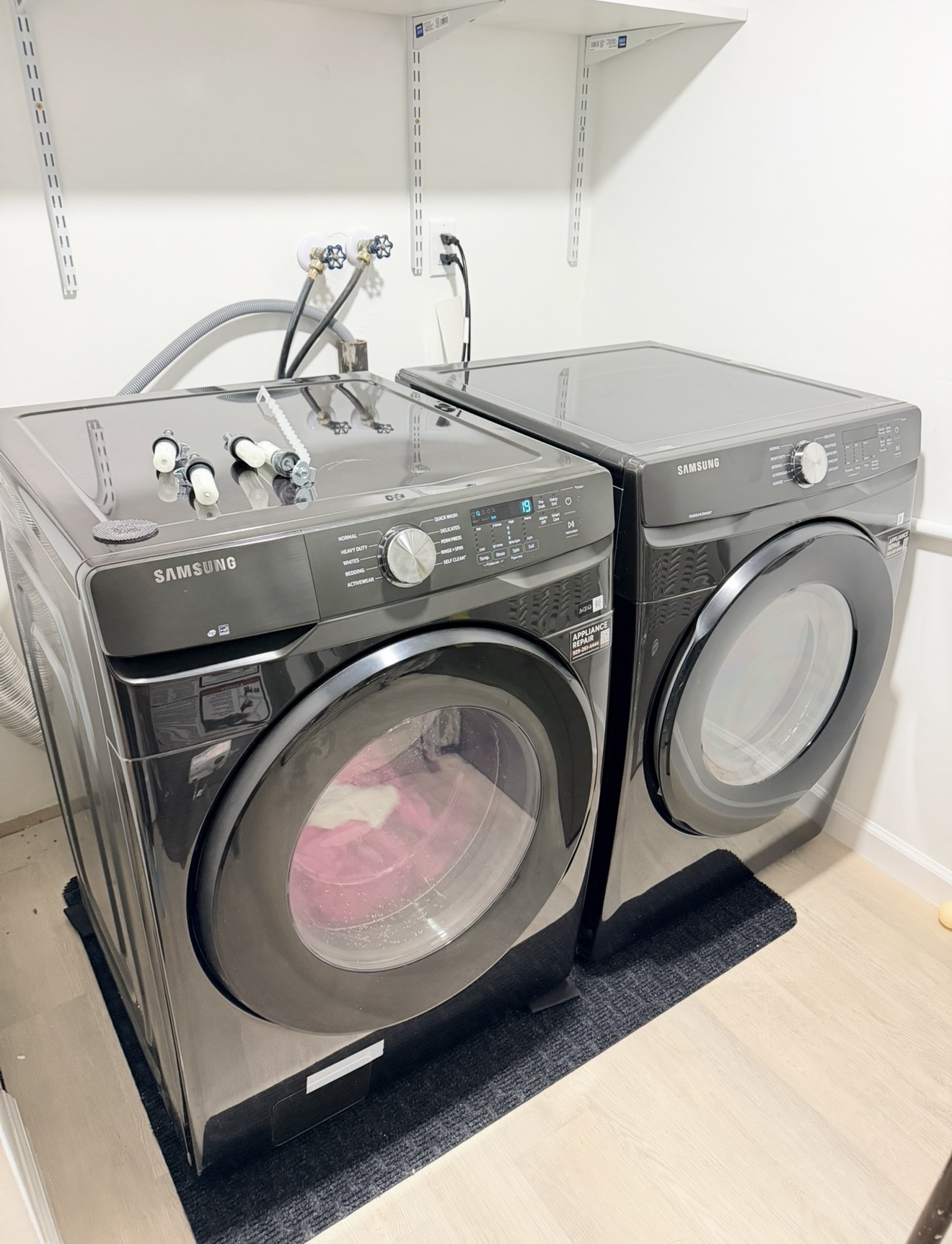
Samsung Dryer Repair
in Great Kills.
HC1 overheating followed by heating element failure — combined fault diagnosed and fixed same-day in 10308.
HC1 overheating followed by heating element failure — combined fault diagnosed and fixed same-day in 10308.
$80 service call · Applied to your repair · Price quoted before any work starts
Why Great Kills residents call us for Samsung dryer repair:
Great Kills sits along Lower New York Bay, Hylan Boulevard running through its center. The neighborhood is built on some of the most established residential land on Staten Island's South Shore — post-war Cape Cods, split-levels, and colonials on Arden Avenue, Buffalo Street, Nelson Avenue, and the blocks around Great Kills Park and Harbor. These homes have housed families for two and three generations, and their appliances reflect that history: Samsung dryers installed in the early-to-mid 2010s are now a decade or more into service, running at the cycle rates of large, busy households.
The fault pattern that comes up regularly from 10308 is a combined one — and it's different from the single-component failures that characterize other neighborhoods in this series. It begins with HC or HC1: the vent is restricted, exhaust temperature rises above the safe limit, and the Samsung detects it. In a household running five or six loads a day — common in the large post-war homes along Hylan Boulevard — the dryer encounters HC1 and gets reset. The homeowner doesn't know what HC1 means, or assumes it's a glitch, and keeps running loads. The dryer overheats again on the next cycle. And the one after. Each overtemperature event exposes the heating element to temperatures above its normal operating range. The element coil — designed for the heat generated by a properly flowing exhaust system — now sees peak temperatures it wasn't built for. Micro-stress accumulates in the coil material across each HC1 event.
Eventually the thermal fuse trips. This is the correct outcome — the fuse is a sacrificial protection device, and it broke the heating circuit before the element failed catastrophically. But "protected" doesn't mean "undamaged." The element has been cycled through abnormal temperatures multiple times. Its coil material has been compromised — the same mechanism that produces fatigue in any metal subjected to repeated thermal stress beyond its design range. Hairline cracks may have formed in the coil material. In this state, replacing only the thermal fuse restores heat — temporarily. The element completes a few more cycles and then fails on its own. The homeowner calls again, pays another service visit, and gets the element replaced two weeks after the fuse.
The correct diagnosis on a 10308 combined-fault call is to test both components on the first visit: fuse first, then element continuity and resistance. If the element tests at the edge of its specification — or shows a resistance reading that's drifted from nominal — it gets quoted alongside the fuse before any work begins. One disassembly, one visit, both components addressed.
The blocks closer to Great Kills Harbor — Hillside Terrace, the streets running toward the marina, properties with water views — have an additional vent problem on top of the lint accumulation that causes HC1. Salt air from Lower New York Bay corrodes exterior vent cap hardware the same way it does in Arrochar: the damper hinge stiffens, the flap resists opening fully under exhaust pressure, and airflow restriction begins at the exterior cap rather than from lint buildup inside the duct. In these properties, the combined fault can develop faster — a partially restricted cap alone is enough to generate HC1, and a cap that's never been inspected contributes to the overtemperature cycling that stresses the element. Checking the cap before calling is important in Harbor-area homes: if it moves stiffly or won't hold fully open, that's the restriction source.
| 🏢 Samsung Service Center | 🔧 Premier Repair | |
|---|---|---|
| Arrival time | 5–7 business days | ⚡ Same day |
| Weekend service | ❌ No | ✅ 7 days a week |
| Price before work starts | ❌ Often not | ✅ Always upfront |
| Element tested with fuse | ❌ Fuse only | ✅ Both on first visit |
| Arrival in 10308 | Scheduled weeks out | ✅ Great Kills regular route |
| 90-day warranty | Parts only, varies | ✅ Parts & labor |
Heavy lint accumulation driving HC1 overheating, and the heating assembly inspected for element stress — the two components assessed together on every 10308 combined-fault call.
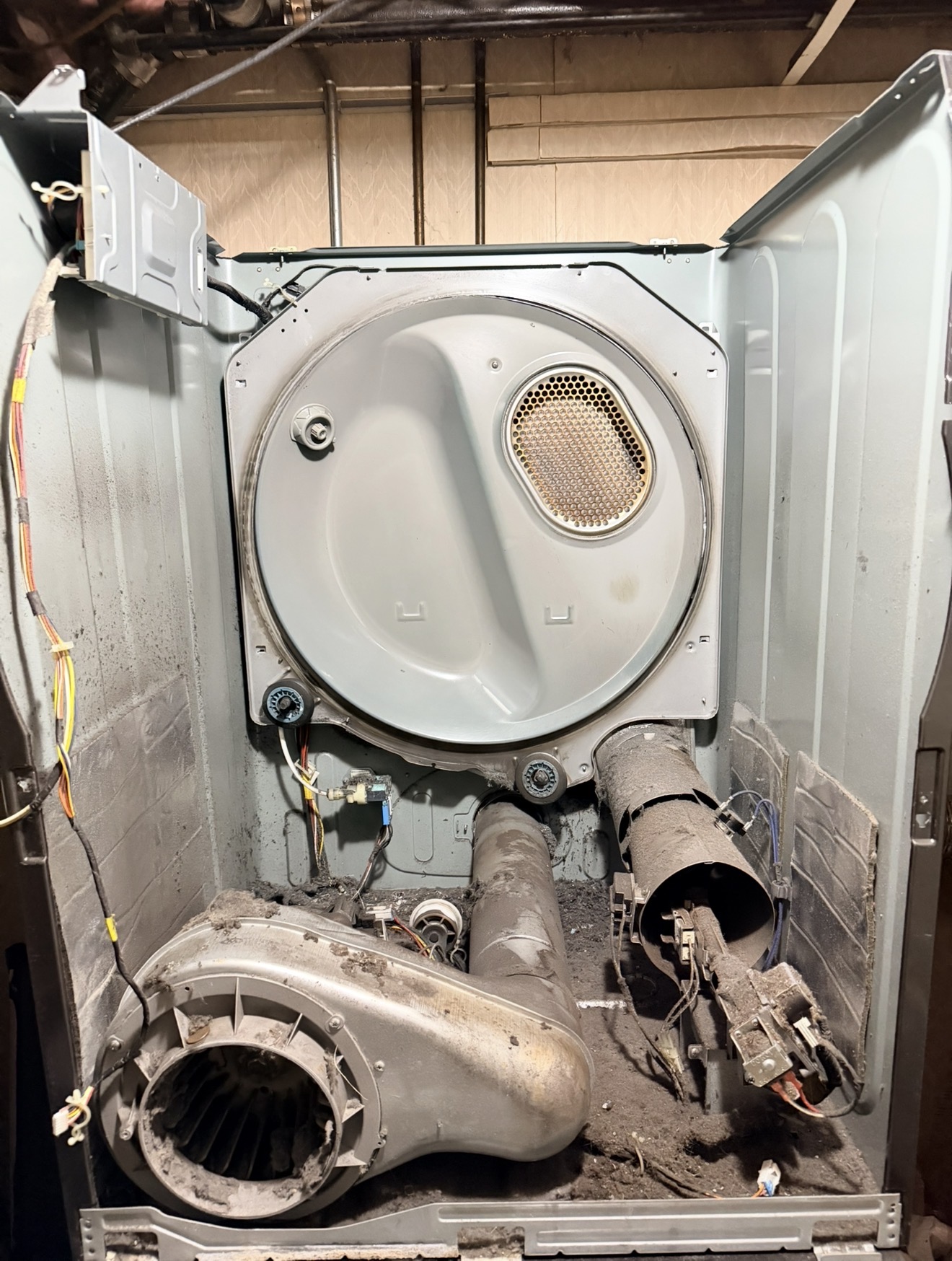
Lint accumulation causing HC1 — Great Kills service call
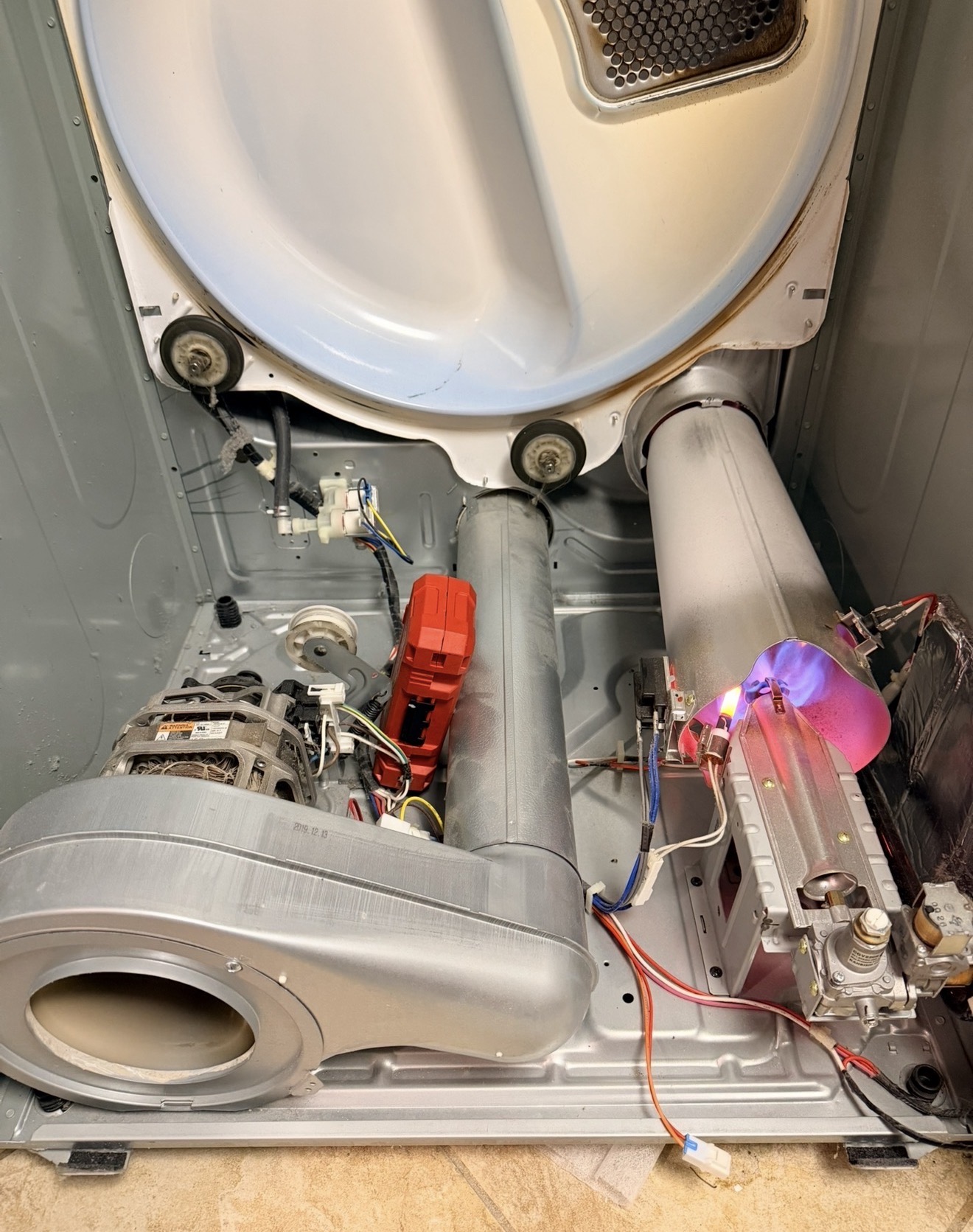
Heating element assessment after HC1 overtemperature
The $80 covers travel, vent assessment from the dryer end, thermal fuse test, heating element continuity and resistance check, and a written quote for both components before any work begins. For 10308 combined-fault calls, we quote the fuse and element together so you have a complete picture before approving any work.
That's the combined-fault sequence. We test the fuse and element on the same visit — one diagnosis, full picture, no second call for a component that should have been quoted the first time.
📅 Book Online Now 📞 Call (929) 261-4444Five Samsung dryer error codes that come up regularly in 10308. HC / HC1 is open by default — the code that initiates the combined fault sequence in this area.
HC or HC1 means exhaust temperature has exceeded the safe limit from a vent restriction. In Great Kills, HC1 is the starting point of the combined fault: the dryer overheats, the homeowner resets it, and the cycle repeats. Each reset-and-run through HC1 exposes the heating element to abnormal peak temperatures. The thermal fuse trips when the overtemperature events accumulate — at which point HC1 disappears and the dryer runs cold.
HE or HE1 after a period of HC1 means the heating circuit has fully failed — either the fuse alone, or the fuse and element together. On some Samsung models no code displays at all and the dryer simply runs cold. The correct response in either case is the same: test the fuse and element together on the first visit, quote both components if both are compromised, and address the vent to prevent the replacement fuse from failing under the same conditions.
tC or tC1 means the exhaust thermistor has reported a reading outside its expected range. After multiple HC1 overtemperature events, the thermistor itself can be affected — heat stress on the sensor housing or the connector harness can cause an intermittent or drifted reading. A tC code appearing alongside or after HC1 events in a Great Kills dryer warrants inspection of both the sensor and its connector before replacing the component.
📞 Call (929) 261-4444dF means the Samsung dryer's door switch isn't confirming the door is fully latched. In Great Kills basement laundry rooms where the dryer runs heavily — five or six loads daily in a large household — the door switch wears faster than it would in lighter-use installations. Check whether the door clicks firmly into the strike. If it closes but dF persists, the door switch assembly needs replacement. On high-cycle machines in 10308, we inspect the door switch as part of the overall condition assessment on every visit.
📞 Call (929) 261-44449C1 means the Samsung dryer detected voltage outside the acceptable range at its power supply. This is an electrical supply issue rather than a dryer fault — the machine is reporting what it sees from the outlet. In Great Kills homes where the dryer shares a 240V circuit with other appliances or where the breaker panel is older, a loose connection or aging breaker can cause intermittent 9C1 codes. We test outlet voltage on arrival and confirm whether the fault is in the dryer or the supply circuit before any repair is attempted.
📞 Call (929) 261-4444This is the 10308 combined-fault sequence in its final stage. HC1 appeared, was reset repeatedly, the thermal fuse eventually blew, and now the dryer runs cold with no error displayed. The fuse broke the heating circuit — which is why HC1 can't reappear — but the element has accumulated stress from the overtemperature events that preceded the fuse failure. We test both on the first visit and quote both components together before any work is approved.
When a Great Kills dryer loses heat shortly after a fuse replacement, the element was already stressed at the time of the original repair and failed on its own after a few more cycles. This is the result of a fuse-only diagnosis that didn't test the element or address the HC1 vent restriction. We include element testing on every fuse replacement call in 10308 — and we assess the accessible vent section to remove the root condition that stressed both components.
Extended drying time in a Great Kills home is often the stage before HC1 appears — the duct is restricted enough to reduce efficiency but the dryer hasn't yet reached the overtemperature threshold. Catching the restriction at this stage means addressing the vent before the thermal fuse and element sequence begins. We also clean the Sensor Dry moisture bars, which accumulate fabric softener residue and trigger premature cycle-end even when clothes are still damp.
In homes near Great Kills Harbor, HC1 sometimes appears only on the first cycle after the dryer has been idle overnight — then clears and runs normally for subsequent loads. This pattern reflects moisture condensation inside the duct that partially closes lint deposits when the duct is cold; as the duct warms through the first cycle, the restriction eases. It's an early sign of humidity-related lint accumulation in the interior duct section that will progress to persistent HC1 over time. We assess the accessible section and advise on whether the duct configuration warrants proactive cleaning.
Call (929) 261-4444 or book online. Tell us whether the dryer showed HC1 before going cold, how long HC1 was appearing before it stopped, and whether heat has been lost completely or partially. This helps us understand the combined-fault stage before we arrive.
⚡ Same-day in Great KillsDiagnosis covers the exterior cap, the accessible duct section, the thermal fuse continuity, and the heating element continuity and resistance. The thermistor is also checked. You receive a written quote for every component that needs attention before any work is approved.
The fuse and any stressed or failed element are replaced in the same disassembly. The accessible vent section is cleared to remove the HC1 root condition. For duct sections through interior walls, we give you an honest assessment of what's accessible and what isn't.
🔍 Both components tested before quotingThe dryer runs a complete heated cycle before we leave. You receive a 90-day parts and labor warranty on every replaced component. If the same fault returns within 90 days, we come back at no charge.
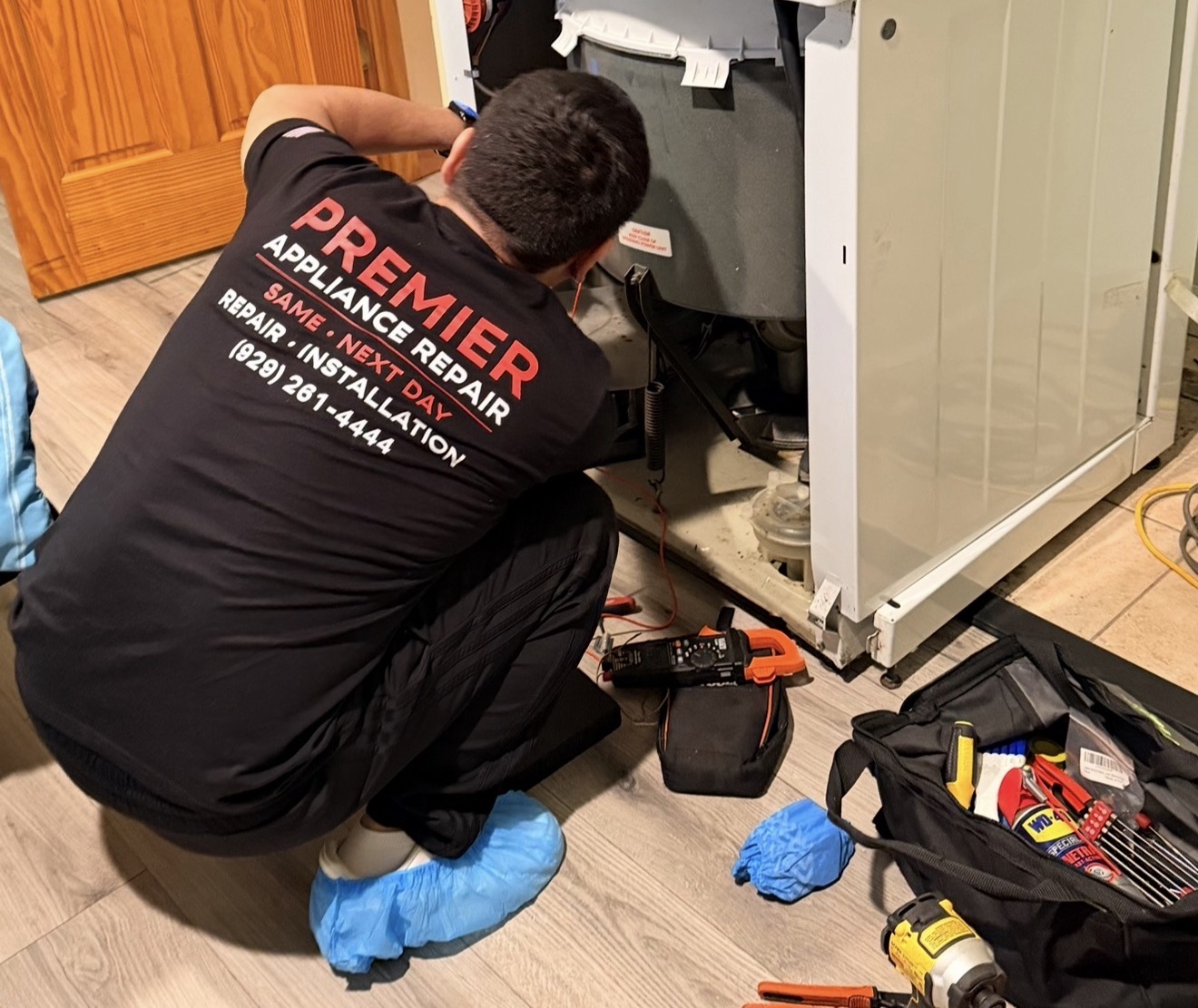
Access in Great Kills is generally straightforward — the post-war homes along Arden Avenue, Buffalo Street, and Nelson Avenue have basement or ground-floor utility rooms accessible from a side entrance or front of the house. The variable is the laundry room position within the basement: in some of the older Cape Cods, the washer and dryer are positioned in a rear corner of the basement with limited side clearance. If the dryer is pushed up against a wall with less than two feet of clearance on each side, mention it when booking — pulling a Samsung forward to access the rear panel for heating component replacement requires enough floor space to work safely.
Great Kills Harbor-area homes near Hillside Terrace and the marina sometimes have garage laundry setups — dryer in a detached garage or a converted utility space. Mention this too, since the vent configuration in a garage installation often differs from a house basement. 10308 is a regular route stop. Same-day service, no surcharge.
"Samsung kept showing HC1 for weeks — we'd reset it and keep going. Eventually no heat at all. Badma came same-day, explained the combined fault clearly: the fuse blew and the element had been stressed by the repeated overheating. Replaced both on the first visit. One call, complete fix."
"We called after the first HC1 code — Badma assessed the vent and tested the element at the same time. The fuse hadn't blown yet, but the element was already showing stress from the overtemperature. Replaced both proactively. Saved us from a second call."
"Another company replaced just the fuse two weeks ago. Dryer stopped heating again three days later. Badma came, tested the element — it had failed from the HC overtemperature stress. Should have been caught on the first visit. He fixed it right this time."
"Great Kills Harbor home — vent cap was corroded and partially stuck. HC1 had appeared a few times and the fuse was already close to the edge. Badma replaced the fuse, tested the element, cleared the accessible duct section. Complete picture in one visit."
"tC1 code appeared after the HC1 events cleared. Badma explained that the thermistor connector had been heat-stressed by the overtemperature cycling. Inspected the connector rather than just replacing the sensor — found the harness was intermittent. Fixed without replacing the thermistor at all."
"HC1 only appeared on the first cycle of the day — fine after that. Badma explained the moisture condensation pattern near the harbor. Assessed the duct, advised on proactive cleaning, and cleaned the moisture sensor bars while he was there. Drying time improved immediately."
"Samsung Smart Care flagged a heating circuit issue but couldn't tell me whether it was the fuse or the element. Badma tested both on arrival, found the element had failed alongside the blown fuse, replaced both, and cleared the vent. That's the complete repair the first time."
This is the combined-fault sequence: HC1 from a vent restriction caused the dryer to overheat repeatedly. Each overtemperature event stressed the heating element coil beyond its normal operating range. Eventually the thermal fuse tripped — breaking the heating circuit and making HC1 disappear. But the element was already weakened by the accumulated heat stress before the fuse blew. We test both components on the first visit and quote them together before any work begins.
A combined fault means two components have failed or been damaged by the same root condition. In Great Kills, the pattern is HC1 → repeated overtemperature events → thermal fuse blown AND element stressed. The fuse protects the element from catastrophic failure — but doesn't prevent the stress that accumulates across multiple HC1 events. A fuse-only repair leaves the damaged element in place. We diagnose and quote both on the first visit.
Yes — always check first. In Great Kills homes along Hylan Boulevard, the cap typically exits through the side or rear of the house. In harbor-area properties, salt-air corrosion on the cap hinge may cause the flap to open stiffly even without lint buildup — press the flap open manually and check that it holds fully open. If clearing the cap resolves HC1 and it stays gone through several loads, no visit is needed. If HC1 returns or the dryer runs cold, the combined-fault diagnosis is needed.
In Great Kills, where HC1 has often been running for weeks before the call comes in, a fuse-only repair may restore heat temporarily — but if the element was already stressed by the repeated overtemperature events, it will fail on its own after a few more cycles. We test the element alongside the fuse on every combined-fault call. If the element tests at the edge of its specification, we quote it before leaving rather than letting you discover it needs replacement days later.
10308 is a regular route stop — Hylan Boulevard, Arden Avenue, Buffalo Street, and the surrounding blocks are familiar territory. After booking or calling, we confirm your arrival window — typically same-day. If the dryer is in a rear basement corner with limited clearance, mention it when you book. Mon–Sat 8am–7pm, Sun 9am–5pm, no weekend surcharge.
Yes. The $80 covers travel, full diagnosis — vent assessment, thermal fuse, heating element, thermistor — and a written quote. If you approve the repair, it applies toward the total. If you choose not to proceed after seeing the quote, you pay the $80 only. Work never starts without your go-ahead.
All major Samsung electric and gas dryer models: DV45T6200 series, DV50R5200 series, DV42H5200 series, DVG45T6200 gas models, DV25BB6900H Bespoke series, and DV6500 FlexDry. Call (929) 261-4444 with your model number to confirm before booking.
90-day parts and labor warranty on every repair. If the thermal fuse, heating element, or any other replaced component fails within 90 days, we come back at no charge. For combined-fault repairs in Great Kills, we document which components were replaced and the vent condition observed — if the same fault returns, that record guides the follow-up assessment.
HC1 followed by no heat, thermal fuse and heating element both stressed, first-cycle HC1 from harbor-area condensation — we're in Great Kills regularly and can be at your door on Hylan Blvd, Arden Ave, or anywhere in 10308 same-day. Fuse and element diagnosed together, vent assessed, one visit.