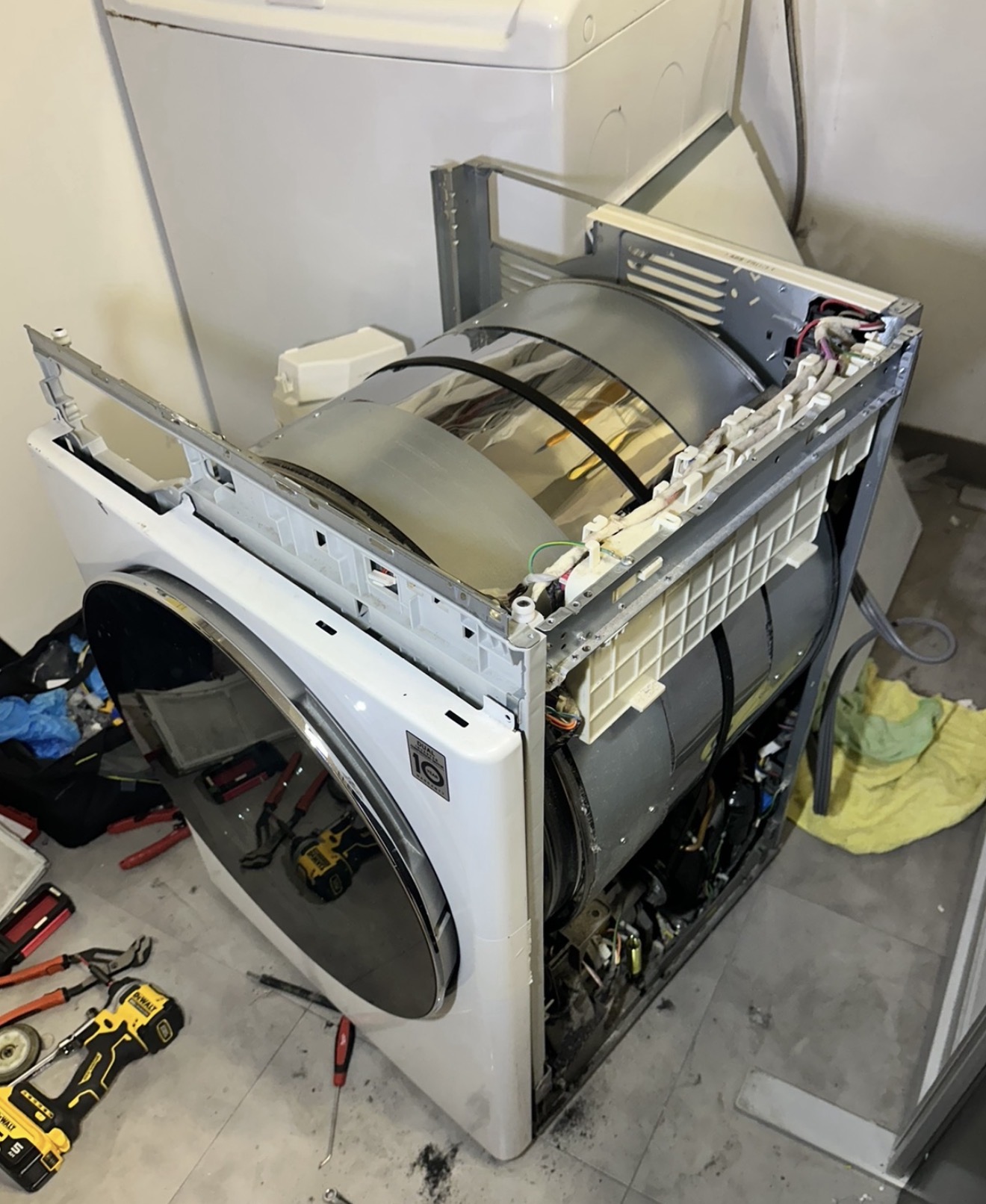
LG Dryer Repair
in Silver Lake.
d80 or d90 code? The vent restriction in these older homes blows the thermal fuse — diagnosed and repaired same-day in 10301.
d80 or d90 code? The vent restriction in these older homes blows the thermal fuse — diagnosed and repaired same-day in 10301.
$80 service call · Applied to your repair · Price quoted before any work starts
Why Silver Lake & Grymes Hill residents choose Premier for LG dryer repair:
Silver Lake and Grymes Hill occupy two very different elevations of the same ZIP code on Staten Island's North Shore. Silver Lake sits at grade around the reservoir and park — a neighborhood of older apartment buildings, attached two-families, and single-family homes along Victory Boulevard and Manor Road, many built in the early-to-mid 20th century. Grymes Hill rises sharply behind it — one of the highest elevations on Staten Island's East Shore — with large Victorian and Colonial-era homes on winding hillside streets that were developed before dryers existed. What both areas share is a housing stock where the relationship between where a dryer sits and where its exhaust needs to exit is rarely straightforward.
On Grymes Hill, the homes are substantial. Deep floor plans, thick exterior walls — often original brick or stone masonry — and interior layouts that were reconfigured over decades to add modern utilities to rooms that were never designed for them. A dryer installed in a basement utility room on the uphill side of one of these homes may need to vent horizontally through ten or twelve feet of masonry to reach the exterior wall. Every foot of duct length adds resistance, and every directional change adds more. LG's Sensor Dry system is calibrated for vent runs within specific airflow parameters. When a Grymes Hill home's masonry-constrained duct run pushes resistance beyond that range, lint accumulates faster at the bends and the d80 code appears sooner than the homeowner expects — sometimes within months of a previous cap cleaning.
In Silver Lake's older apartment buildings and two-family homes, the problem is often a different geometry. Dryers were added as retrofits into spaces not originally designed for them — utility closets, bathroom-adjacent rooms, converted alcoves off kitchens. The flexible foil duct that connects them to exterior walls was routed around obstacles rather than in straight runs. Foil duct also compresses and sags over time, reducing its internal diameter and airflow capacity. A 4-inch duct with one significant sag reads to LG's monitoring system as a restriction, and in a building where multiple units share similar retrofitted setups, d80 calls appear regularly from the same buildings, across multiple floors.
What d80 does to the dryer when ignored is the same regardless of whether the home is a hillside Victorian or a Victory Boulevard two-family. Heat backs up inside the drum housing instead of escaping through the vent. The thermal fuse — a one-time safety device positioned near the heating assembly — reads internal temperatures above its trip point and opens permanently. The dryer continues tumbling. No error code appears. The clothes come out damp and cool, and the d80 code that was visible two weeks ago has been replaced by silence. The warning and the consequence are separated in time, which is why owners often don't connect them. They are the same event.
| Factor | LG Service Center | Premier Appliance Repair |
|---|---|---|
| Availability | 1–2 weeks wait | ✓ Same-day |
| Service call fee | $100–$150+ | ✓ $80, applied to repair |
| Older homes & retrofit installs | Standard visit protocol | ✓ Familiar with 10301 layouts |
| Vent assessment included | Not standard | ✓ Every d80 call |
| Warranty | 30–60 day parts | ✓ 90-day parts & labor |
| Weekend service | Often not available | ✓ 7 days a week |
When vent restriction causes heat backup, this is what we find and repair inside Silver Lake and Grymes Hill LG dryers.
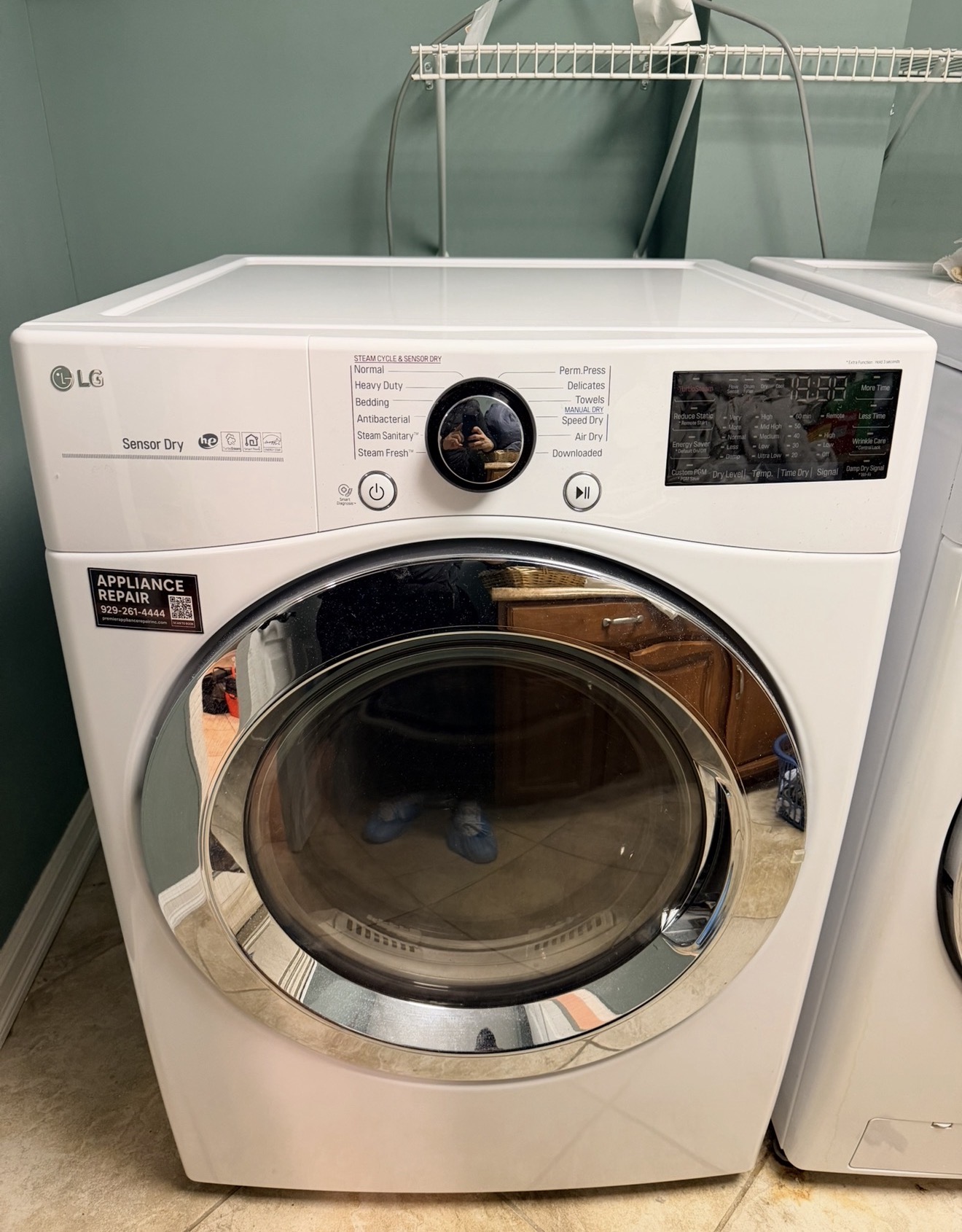
LG Sensor Dry dryer — diagnosis starts with the exterior cap before the cabinet opens
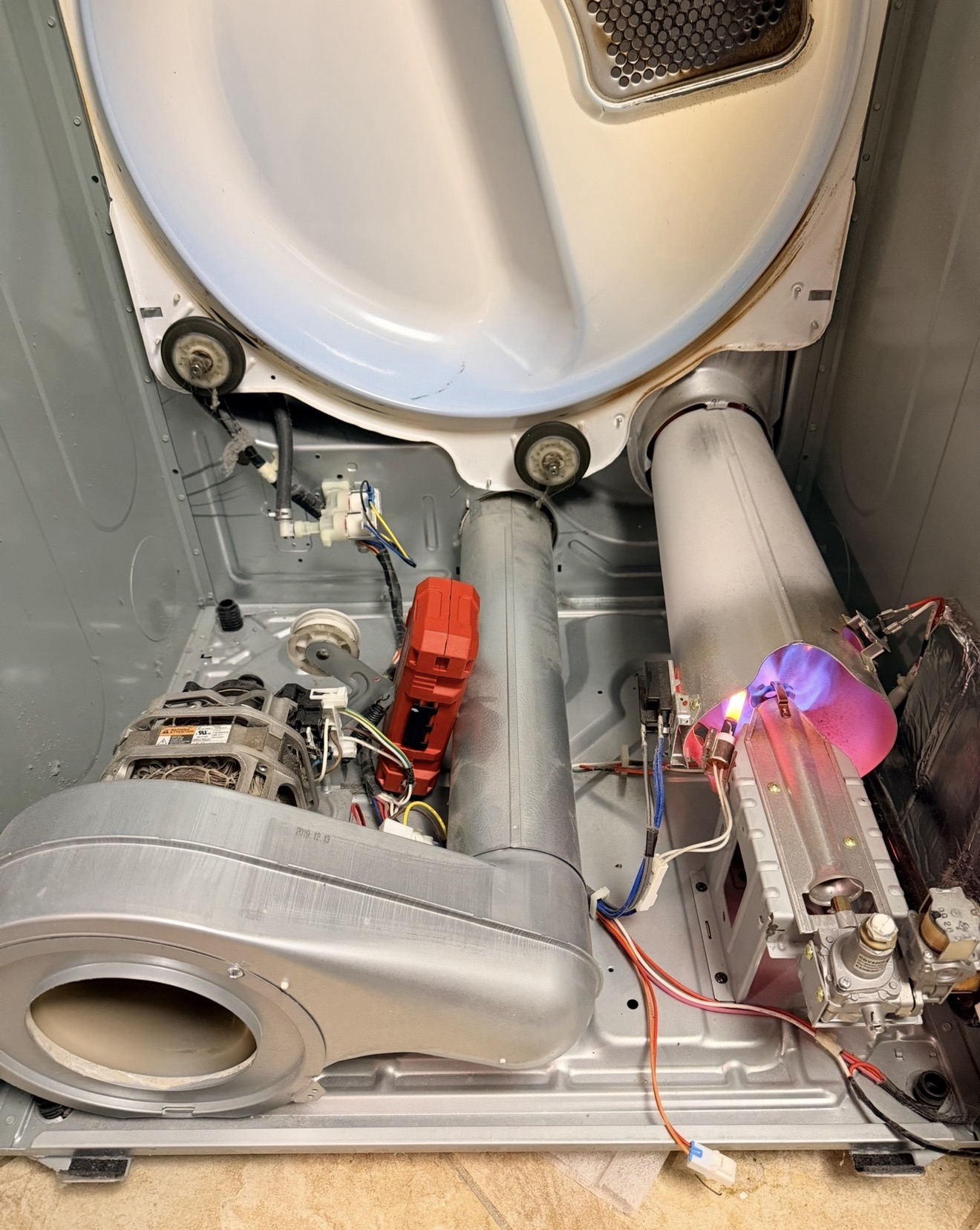
Heating assembly tested after thermal fuse replacement — confirming heat is fully restored
On a d80 call, the $80 covers travel, full diagnosis, and vent assessment. Parts — thermal fuse, heating element — are quoted separately before any work begins. If the assessment finds no failed components, the $80 is the complete cost of the visit. No surcharges for Silver Lake or Grymes Hill addresses.
Check the exterior cap first — if d80 persists or the dryer is already cold, heat backup has likely damaged the thermal fuse. We diagnose and repair same-day in 10301.
📅 Book a Same-Day Visit 📞 Call (929) 261-4444The d80, d90, and d95 sequence is LG's graduated airflow warning system. In 10301 homes with constrained vent routes, these codes progress faster than in newer construction with optimized duct runs.
At d80, the duct is 80% blocked. Heat is backing up inside the drum housing on every cycle. In Grymes Hill masonry homes and Silver Lake retrofit installations, d80 appears regularly because the vent configurations in these homes carry more inherent resistance than modern straight duct runs.
At d90, almost no designed airflow is reaching the exterior. Every cycle runs the dryer at temperatures significantly above design range. The thermal fuse has been absorbing that stress repeatedly and may be at the edge of its trip threshold. On every d90 call we test the fuse continuity immediately — if it's already blown, fuse replacement is added to the visit alongside the vent assessment.
📞 Call (929) 261-4444d95 means the duct is critically restricted — LG considers this a safety-level event and may terminate cycles early to prevent component damage. Switch the dryer off and call us. On every d95 call we assess the thermal fuse, heating element, and blower wheel for heat-related damage alongside the vent assessment. The risk of a secondary component failure increases with every cycle run at d95 restriction levels.
📞 Call (929) 261-4444 — urgentThe thermistor monitors drum and exhaust temperatures throughout the heating cycle. A tE or tE1 code means the sensor is reading outside its expected range — either the thermistor itself has failed or its wiring connector has developed a fault. In older 10301 homes where the dryer has run through many thermal cycles, thermistor lead wire fatigue is a contributing factor. We test both the sensor resistance and the connector on-site.
📞 Call (929) 261-4444LG's Sensor Dry system uses metal sensor bars inside the drum to read clothing moisture levels and end the cycle automatically. Fabric softener residue and fine lint coat these bars over time, insulating them from accurate contact. An HS fault on a machine that has run many cycles in an older 10301 home frequently resolves with sensor bar cleaning rather than component replacement.
📞 Call (929) 261-4444Extended drying times without an error code are the earliest sign that vent restriction is building. In Grymes Hill masonry homes and Silver Lake retrofit installations, restriction can develop gradually over six to twelve months before the d80 threshold is crossed. What was a 45-minute cycle stretches to 60, then 75 minutes as airflow decreases. Owners adjust their routine rather than diagnosing the machine. By the time d80 appears, the duct has usually been partially blocked for months and the thermal fuse has been under repeated heat stress.
A vent cap flap that barely moves during a drying cycle is the most actionable finding before a service call. If the flap is caked with lint or mechanically stuck from years without maintenance, cleaning or replacing the cap may resolve d80 entirely without a visit. This check takes two minutes and should be the first step whenever d80 appears. In older Silver Lake buildings where the exterior vent cap has never been replaced since the dryer was installed, the cap itself is sometimes the primary restriction point.
When vent restriction causes temperatures inside the drum housing to reach the high-limit thermostat's trip point, the dryer shuts off mid-cycle to prevent damage. After the machine cools, it restarts — and then shuts off again at the same point in the next cycle. This pattern is the stage between a d90 warning and a fully blown thermal fuse. Acting at this stage keeps the repair to a vent assessment and thermostat check rather than fuse replacement.
When the vent is partially restricted, the heat the dryer generates can't escape at its designed rate — drum temperatures climb higher than normal even without a d80 code triggering yet. Clothes come out hot to the touch rather than warm, and repeated exposure to elevated heat can damage synthetic fabrics, elastic, and delicate fibres over time. If your LG's laundry is consistently too hot at cycle end, check the exterior vent cap and the flexibility of the duct connection behind the machine before the restriction worsens to d80 territory.
Before booking, go outside during a cycle and watch your vent cap flap. If it's blocked, clean it and retest — if d80 clears and stays gone, no visit is needed. If d80 persists or the dryer is already running cold, the restriction has caused internal damage and we need to diagnose it.
💡 Cap cleaning resolves d80 when that's the blockage pointSilver Lake and Grymes Hill are part of our regular North Shore route. After you book or call, we confirm your arrival window — same-day is typical. The $80 covers travel, full diagnosis, and vent assessment. Nothing starts without your approval of the quote.
We test the thermal fuse, heating element, and blower wheel — the components most exposed to heat stress from d80 and d90 restriction. We replace what's failed. We assess the accessible vent section from the dryer end and clear what we can reach. For complex duct runs through masonry walls or multiple floors, we advise you honestly on what a specialist would need to address.
🔧 Component repair + vent assessment in one visitWe run a full cycle and confirm the dryer is heating normally before packing up. On LG ThinQ models we also check the ThinQ app diagnostics. If an unresolved duct section remains beyond what we can reach, we'll tell you clearly — so the new thermal fuse isn't exposed to the same conditions that blew the last one.
✅ 90-day warranty on every repair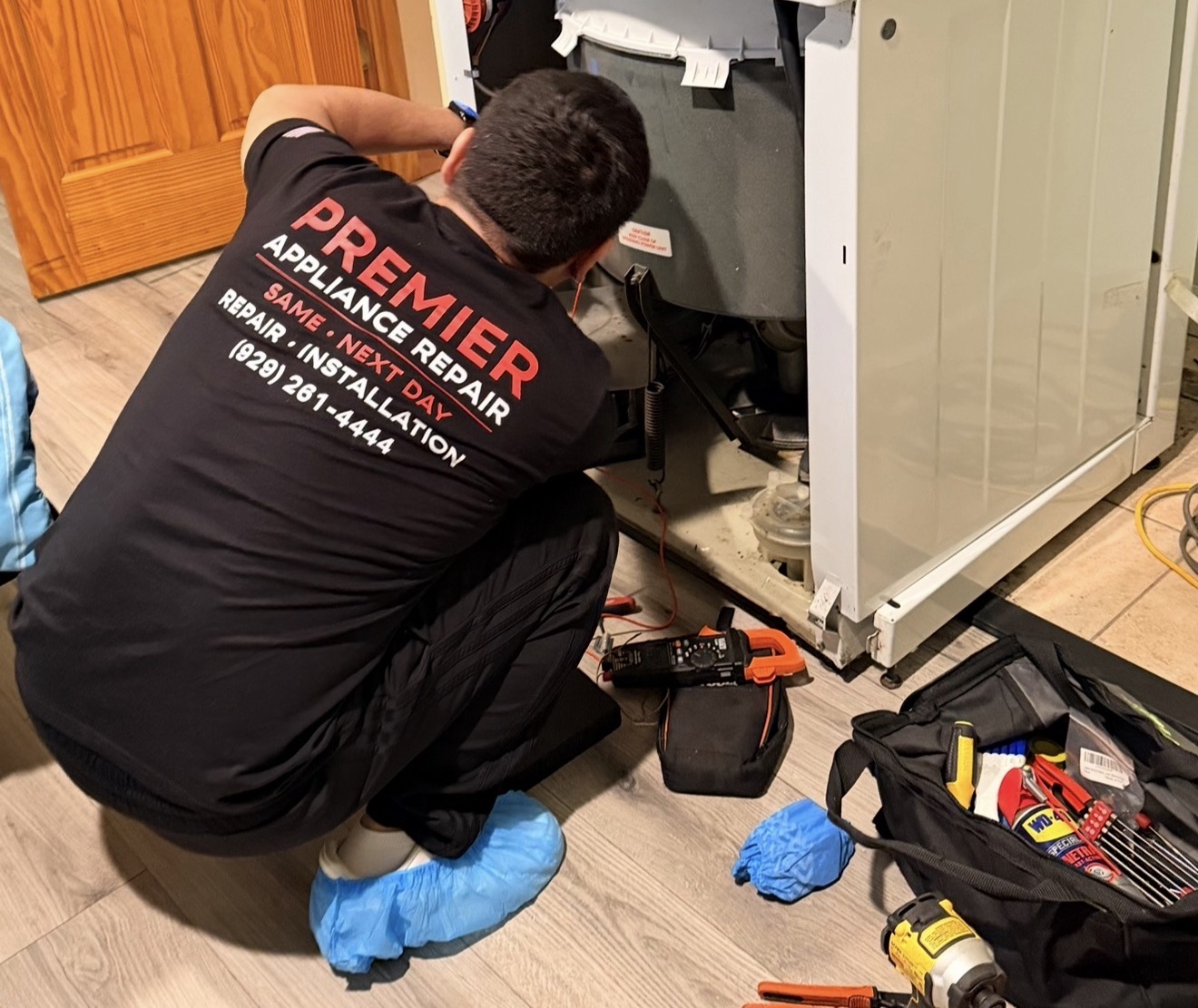
Silver Lake sits at the center of Staten Island's North Shore, anchored by the Silver Lake Reservoir and Park and crossed by Victory Boulevard — the main commercial corridor that runs from the St. George Ferry terminal area westward across the Island. The neighborhood has a mix of older attached homes, mid-century apartment buildings, and single-family houses that developed over several decades of the 20th century. Grymes Hill rises immediately to the south — a steep ridge of large Victorian and Colonial homes on winding streets that reach some of the highest elevations on Staten Island's East Shore.
The two neighborhoods share a ZIP code but have very different housing characters, and that difference shows up in the types of dryer problems we see. In Silver Lake, it's often a retrofit installation in an apartment or two-family that was never optimally vented — flexible duct, multiple bends, a cap that faces the prevailing wind off the Kill Van Kull. In Grymes Hill, it's a large older home where the duct runs through substantial masonry walls or descends from a basement utility room through multiple directional changes. Both produce vent resistance conditions that LG's monitoring system reads as d80 sooner than the homeowner expects.
We cover all of 10301 regularly — Silver Lake, Grymes Hill, St. George, and the residential streets between Victory Boulevard, Clove Road, and Forest Avenue.
"My LG had been showing d80 for weeks and I kept putting it off. Then it stopped heating entirely — no code, no warning, just cold air. Badma came the same afternoon, found the blown thermal fuse, replaced it, and explained that the d80 I'd ignored was the warning. Very professional, very clear. Wish I'd called when the code first appeared."
"Called about a d90 code. Badma arrived within a few hours, tested the thermal fuse immediately — it had already blown. Replaced it, assessed the vent section he could reach, and told me honestly what the masonry wall section still needed. Very transparent about what appliance repair covers and what it doesn't. That kind of honesty is rare."
"LG dryer running perfectly, drum spinning, no error code — but completely cold air. Badma diagnosed a blown thermal fuse in ten minutes. He explained that a d80 code I'd seen a month ago was the warning I should have acted on. Same-day repair, 90-day warranty. Couldn't ask for a better experience."
"I have an older two-family on Victory Boulevard and the dryer vent was never great — retrofit install from years ago. Badma came for d80, found the fuse was at the edge, replaced it before it went completely, and gave me an honest picture of the duct configuration. Said the flexible section behind the machine was partly kinked and fixed that too. Very thorough."
"My LG showed d95 — I didn't know what that meant but it sounded serious. Badma came quickly, explained the escalation from d80 to d95 and why it matters, found heat damage to the thermal fuse, and repaired it. He also checked the blower wheel and heating element for stress damage. Everything was still intact. Very reassuring visit."
"Dryer was taking 90 minutes to dry a normal load — no codes, just slow. Badma came and found the exterior cap was practically sealed with lint. He cleared the accessible duct section, tested the thermal fuse, and showed me how to check the cap monthly. Within one normal cycle, drying times were back to 45 minutes. Sometimes it's a straightforward fix."
"Five stars, genuinely. Badma put shoe covers on at the door, explained everything before and after doing it, showed me the blown fuse before he replaced it. He was here within hours of my call on a Saturday. Our LG has run perfectly for three months since the repair. This is how appliance repair should work."
The d80 code means LG's airflow monitoring has detected 80% vent restriction — heat is backing up inside the drum housing instead of escaping. Go outside during a cycle and watch your exterior vent cap flap. If it barely opens, clean the cap and retest — if d80 clears and stays gone, no visit needed. If d80 persists, the restriction is deeper in the duct and the components exposed to the heat backup need to be assessed. That's when to call us.
The housing in 10301 creates vent routing conditions that generate more resistance than modern straight duct installations. Grymes Hill's large Victorian homes have deep floor plans and thick masonry walls — the vent run from laundry room to exterior wall often involves significant length and multiple direction changes through solid construction. Silver Lake's older apartment and two-family buildings frequently have retrofit dryer installations with flexible duct routed around obstacles. Both configurations accumulate lint-related restriction faster than standard setups, and LG's sensor reads that restriction as d80.
The d80 code was the warning; the no-heat condition is the result. When vent restriction forced heat to back up inside the drum housing over multiple cycles, the thermal fuse — a one-time safety device — eventually opened permanently to prevent a fire. The dryer keeps tumbling normally but the heating element or gas burner receives no power. The fuse must be replaced. These two events are the same problem separated by time — d80 ignored, fuse blown.
No. The d80 code reflects a vent problem, not a machine failure. The dryer itself is functioning correctly — LG's sensor detected a restriction in the duct. If d80 is caught before the thermal fuse blows, clearing the vent restriction resolves the issue without part replacement. If the fuse has already blown, replacing it restores full function to an otherwise healthy dryer. Neither scenario means the machine is done.
We diagnose which components the heat backup has damaged — thermal fuse, heating element, or blower wheel. We replace what's failed and quote everything before starting. We also assess the accessible section of the vent duct from the dryer end and clear what we can reach. For duct runs through masonry walls, wall cavities, or multiple floors — common in both Grymes Hill hillside homes and Silver Lake retrofit installations — we advise you on what a duct specialist would need to address for those sections. The $80 covers travel, diagnosis, and vent assessment.
Both neighborhoods are on our regular North Shore route. After you call or book online, we confirm your arrival window — same-day is typical. Mon–Sat 8am–7pm and Sun 9am–5pm, no weekend surcharge. Call (929) 261-4444 to confirm today's availability.
All major LG dryer models in Silver Lake and Grymes Hill including the DLE7300 and DLEX3700 electric series, the DLG3401 and DLGX5500 gas series, and the Signature DLHC1455. All share the same d80/d90/d95 monitoring system and thermal fuse design. Call (929) 261-4444 with your model number before booking to confirm part availability.
Yes. The $80 covers the visit, full diagnosis, and vent assessment regardless of outcome. If no failed components are found — which can happen when d80 appeared but the thermal fuse is still intact and the accessible vent section is clear — the $80 is the complete cost. If parts are identified, they're quoted separately before any work begins. No surcharges are added for Silver Lake or Grymes Hill addresses.
LG dryer showing a code or running cold on Victory Boulevard, Grymes Hill Road, Manor Road, or anywhere in Silver Lake or Grymes Hill — check the exterior cap first, then call us if d80 persists or heat is already gone. Same-day service, 90-day warranty.