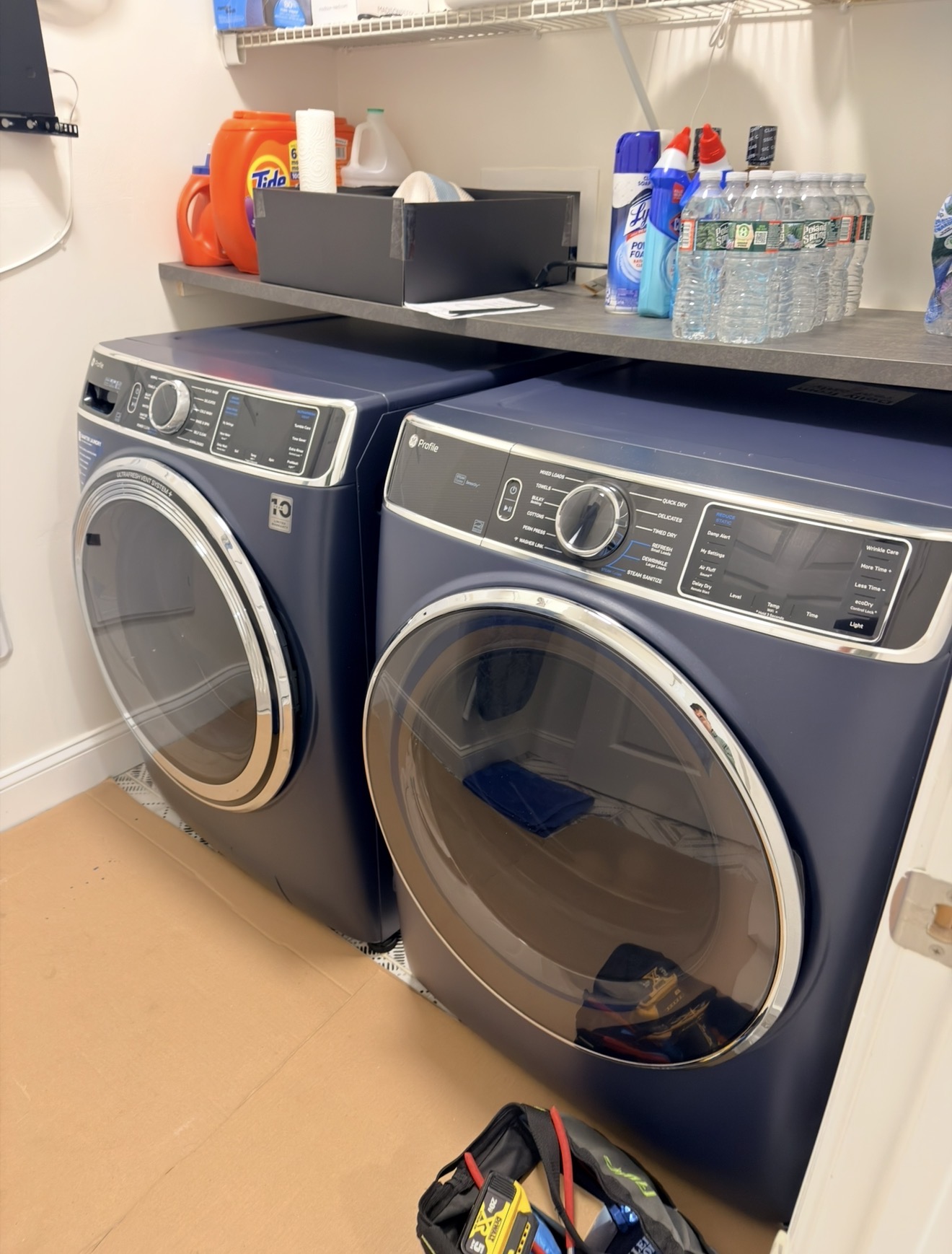
GE Washer Repair in
Pleasant Plains · 10309
No-code diagnosis · Stopped mid-cycle · Top-load & front-load — fault log read on-site, same-day across ZIP 10309
No-code diagnosis · Stopped mid-cycle · Top-load & front-load — fault log read on-site, same-day across ZIP 10309
$80 service call · Applied toward repair · 90-day warranty
GET A CALLBACK
Describe the issue — Badma will call with a price and confirm same-day availability in 10309.
Why Pleasant Plains? Why No-Code?
Pleasant Plains and Princes Bay occupy the southwestern corner of Staten Island — a quieter, more suburban stretch where streets feel wider, yards are larger, and the pace of the neighborhood is noticeably different from the commercial corridors further north. Homes here were built largely in the 1970s through early 2000s, and the appliances inside them reflect that stability: a GTW685BSLWS that's been running for a decade, a GFW490RPKDG that was the household's first front-loader and is still the only one they've owned. When a machine stops mid-cycle in Pleasant Plains with nothing showing on the panel, the first instinct is often "it's dead." Almost never is that true.
Every GE washer with a digital control board — front-load or top-load — monitors the wash cycle through a network of sensors: water level, lid position or door status, motor load, drain timing, and inlet flow. When any sensor value falls outside the expected range during a cycle, the control board registers a fault. On most modern appliances, that fault is immediately surfaced to the display as a readable error code. On the GTW685BSLWS and GTW720BSNWS top-loaders that are most common in Pleasant Plains, the fault is registered and the cycle is stopped — but the code doesn't always appear on the panel.
This is a characteristic of the control board architecture in this generation of GE top-loaders, not a sign of a more complex or more expensive problem. The fault exists. It's logged in the board's non-volatile memory. It stays there after power is cycled, after the machine is unplugged overnight, after you've run every reset sequence you found online. A diagnostic reader extracts that stored code directly from the board — and in most cases, it points clearly to a single component: the drain pump, the lid lock switch, the water level sensor, or the inlet valve.
No code on the panel doesn't mean no information. The fault log retains the reason the machine stopped — Badma reads it on every no-code call in 10309. The absence of a displayed code reflects a display limitation, not a diagnostic dead end.
Across the GTW685BSLWS and GTW720BSNWS machines Badma services in Pleasant Plains, two no-code fault patterns account for the majority of calls. The first is a drain pump stop: a foreign object — most often a coin or a small garment — reaches the pump impeller and blocks it. The board detects that the drain cycle didn't complete within its timing threshold, stops the machine with the tub full, but doesn't generate a readable F9E1 or Ld code on the panel. The fault log shows the drain timing fault; the impeller obstruction is confirmed on inspection.
The second pattern is a partial lid lock failure. The GTW685 lid lock switch is actuated by a plastic arm that engages when the lid closes. Over eight to twelve years of use, this arm can develop a partial failure — enough contact to pass the initial lid-closed check at the start of the cycle, but not enough to hold during agitation or at the transition to spin. The board registers the discrepancy and stops the cycle. Because the lid lock passed its initial check, the board doesn't always generate a full F5E1 code — the stop appears as a no-code halt at a consistent point in the cycle. Badma tests the lid lock assembly under simulated load conditions rather than just checking for continuity at rest.
GE front-loaders in 10309 — most commonly the GFW490RPKDG — also produce no-code stops, but through a different mechanism. On front-loaders, the most common no-code fault pattern is a debris filter that's restricted enough to slow the drain but not fully block it — the machine completes the drain cycle, but more slowly than the board expects. The board may log an internal timing note without generating a display code. Over subsequent cycles, the restriction worsens until a full Ld fault appears. By that point, the drain pump may already be operating under sustained back-pressure. Badma checks the debris filter on every front-load no-code call in 10309 before examining the pump.
Why Choose Premier
| Factor | 🏢 GE Service Center | 🔧 Premier Appliance |
|---|---|---|
| Arrival in Pleasant Plains | ❌ 5–14 day wait | ✅ Same-day |
| Fault log read — no display code | ❌ Requires error code | ✓ Every no-code call |
| Lid lock tested under load | ❌ Continuity check only | ✅ Simulated load test |
| Service call cost | ❌ $100–150+ | ✅ $80, applied |
| Warranty | ❌ Varies | ✅ 90-day guarantee |
| Weekend availability | ❌ Weekdays only | ✅ Mon–Sun |
Real Repairs, Pleasant Plains
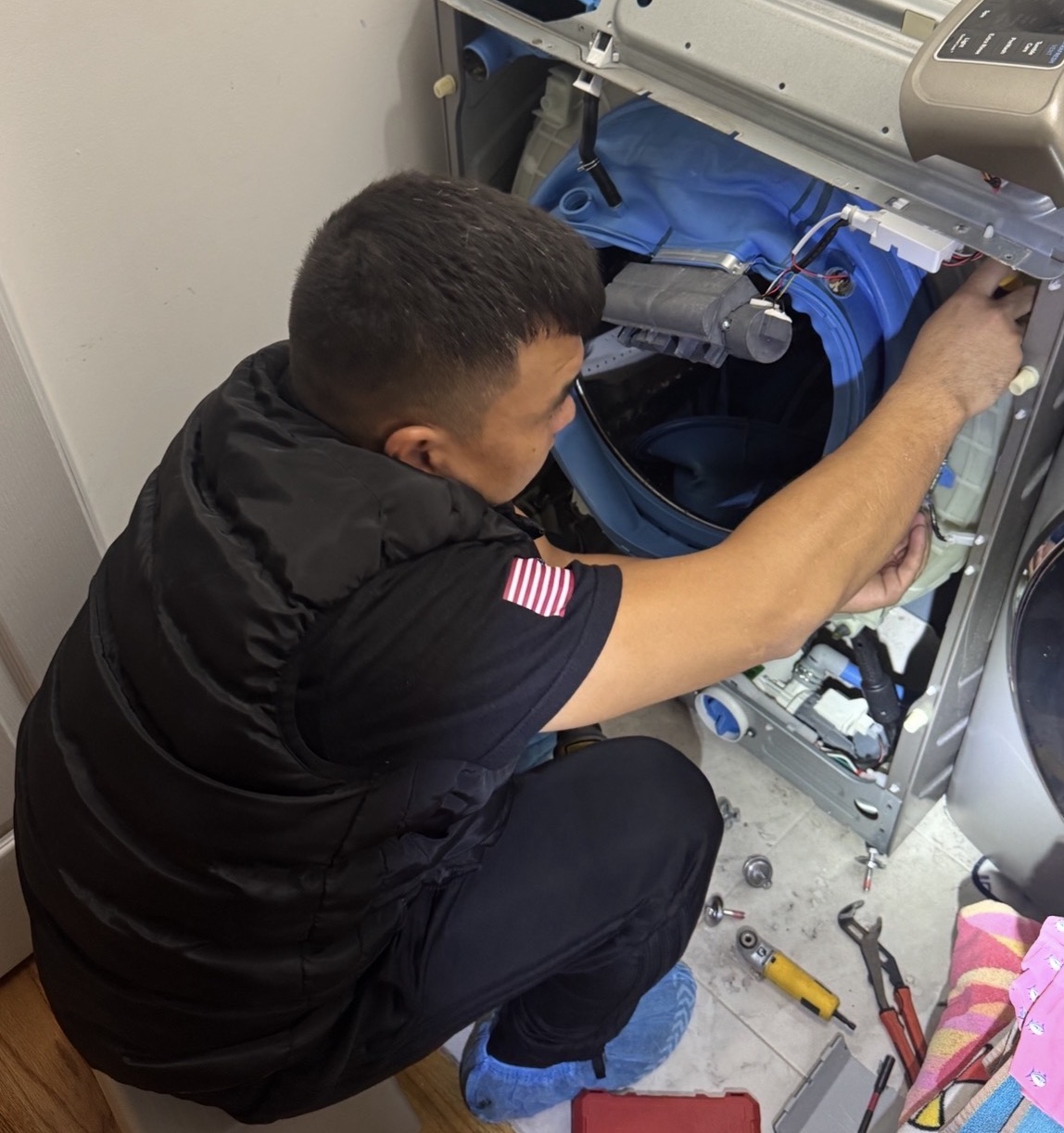
On-site diagnosis — fault log read before any part is touched
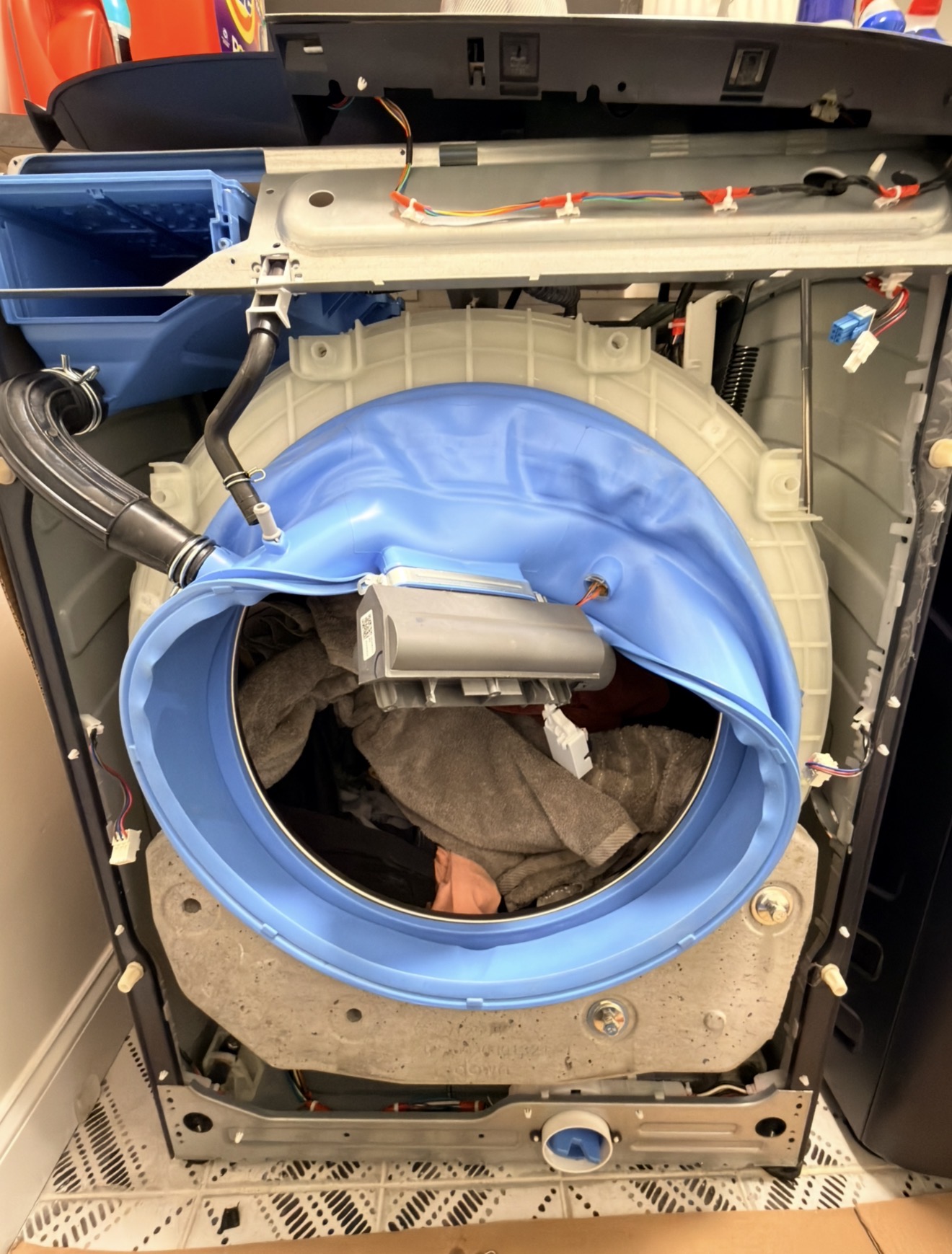
GE washer opened — drain pump and lid lock system access
Transparent Pricing
Book Your Visit
Same-day diagnosis — fault log read on-site, $80 applied toward repair. Badma covers Woodrow Rd, Page Ave, Sharrott Ave, and all of 10309.
📅 Book Online Now 📞 (929) 261-4444GE Washer Codes & No-Code Symptoms
A GE washer that stops with no displayed code has almost certainly logged the reason internally. On GTW685BSLWS and GTW720BSNWS top-loaders — the most common machines in Pleasant Plains — the board detects the fault, stops the cycle, and stores the code without surfacing it to the panel. Badma reads the fault log on-site with a diagnostic reader. The log identifies which stage of the cycle the board stopped at and which sensor triggered the halt — drain, lid, motor load, or fill. That narrows the diagnosis to the relevant component before anything is opened or tested mechanically.
F5E1 means the lid lock didn't engage at cycle start; F5E2 means it engaged but didn't release. On the GTW685BSLWS in Pleasant Plains, a partial lid lock failure often doesn't generate either code — the lid passes its initial check but fails during agitation or at the spin transition, producing a no-code stop rather than a displayed fault. When F5E1 or F5E2 does appear, it indicates a more complete failure. Badma tests the lid lock assembly under simulated operating conditions in both cases — a static continuity check isn't sufficient to catch a partial failure.
On GE front-loaders in Pleasant Plains, Ld or F9E1 typically arrives after a period of slow draining that didn't generate a code — the debris filter was building up gradually before it restricted flow enough to exceed GE's timing threshold. Badma cleans the filter and tests the drain cycle. If Ld clears, the visit is complete. If Ld continues, the drain pump is tested under load. On GE top-loaders in 10309, the equivalent drain fault almost always arrives without any displayed code.
dL means the door lock assembly failed to confirm a secure latch. On GE front-loaders in Pleasant Plains, dL occasionally appears alongside a door gasket that has worn enough to prevent the door from seating fully — the lock is functional but the gasket displacement prevents a flush closure. Badma checks the lock mechanism and door alignment together, since a dL that's caused by gasket displacement rather than lock failure requires a different repair path.
nF or F8E1 means the machine didn't fill within its expected window. Inlet screens are cleaned first — mineral deposits restrict flow enough to trigger nF without any valve failure. If nF continues after screen cleaning, the solenoid valve is tested and replaced as needed. On GE top-loaders in 10309 where nF arrives without a displayed code, the fault log identifies the fill timing fault and Badma checks the inlet system as the first step.
Common Symptoms
This is the most common call from Pleasant Plains by a significant margin. The GTW685BSLWS stops mid-cycle with a tub full of water and no panel indication of why. Badma reads the internal fault log to identify which system triggered the stop, then works through the two most common causes in sequence: drain pump obstruction first, lid lock switch second. The repair path is clear once the log is read — and most no-code stops in 10309 resolve in a single visit.
A machine that consistently stops at the same stage — always during agitation, always at the transition to spin, always during drain — is logging a fault at that specific point in the cycle. Consistent stops are among the easiest no-code faults to diagnose: the log shows exactly which cycle stage triggered the halt, which narrows the cause to the components active at that stage. Badma identifies the stage from the log and targets the diagnosis accordingly — rather than working through the entire machine sequentially.
A machine that completes its cycle but leaves clothes wet has failed to spin effectively — either the spin cycle didn't reach full speed, was cut short, or didn't happen at all. On GE top-loaders in Pleasant Plains, this often indicates a lid lock switch that's partially failed: the machine passes the initial lid check, runs through fill and agitation, then fails to transition to spin because the lid lock can't confirm the lid is secure under load. The board stops the spin without generating a code. Badma tests the lid lock assembly and checks the motor control system for any secondary fault that could explain reduced spin speed.
A GE front-loader in Pleasant Plains that's running increasingly long cycles without generating a code is likely in the early stage of debris filter restriction. The filter is partially blocked — enough to slow the drain but not yet enough to trigger Ld. Badma cleans the filter during every slow-drain call in 10309 as the first step. He also reads the fault log to check whether the board has logged any internal timing notes from previous slow-drain cycles that haven't appeared on the display.
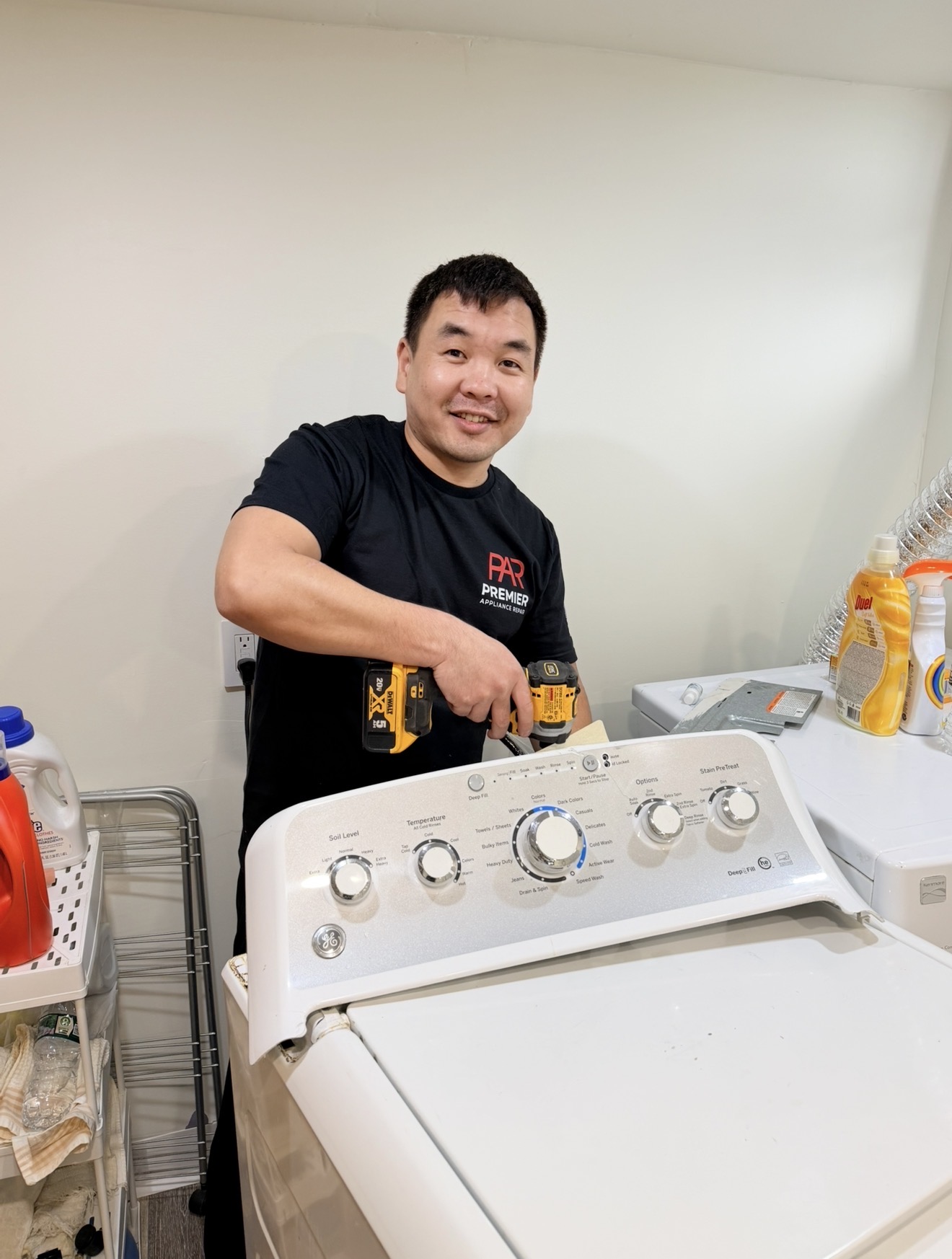
Your Technician
The Repair Process
Call (929) 261-4444 or book via Calendly. Share your GE model number and describe the sequence: when in the cycle it stopped, whether the tub has water, whether the machine responds to the panel at all. For no-code calls, the sequence of events before the stop is often as useful as the fault log — it helps Badma anticipate which system to check first.
📅 7 Days a WeekBadma connects a diagnostic reader and extracts the stored fault log. The log identifies which stage of the cycle the board stopped at. For a drain-stage stop, the pump and impeller are checked first. For a spin-transition stop, the lid lock assembly is tested under load. For a fill-stage stop, the inlet screens and valve are examined. Each step is guided by the log — not by working through every component sequentially.
Once the cause is confirmed, you receive a written quote for the specific repair. No work begins without your explicit approval. The $80 service call — which includes the fault log read — applies in full toward the repair if you proceed.
When the confirmed part is available for the appointment, the repair is completed on-site. Badma runs a full cycle — fill, agitation, drain, spin — before leaving to confirm the fault log no longer registers the previous stop condition. Every completed repair carries a 90-day parts and labor warranty.
🛡️ 90-Day WarrantyServing Pleasant Plains & Princes Bay
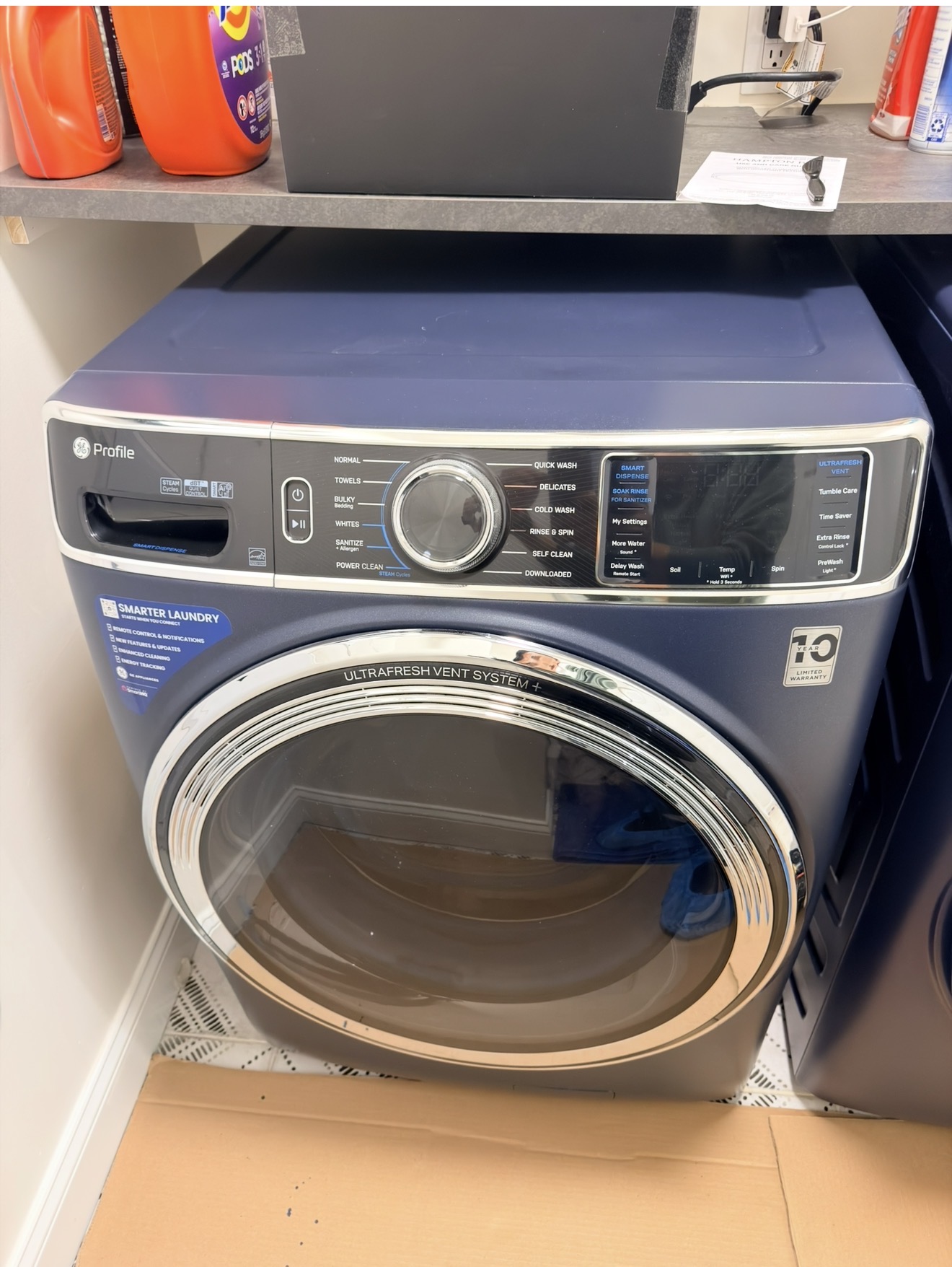
Pleasant Plains and Princes Bay occupy the southwestern edge of Staten Island — quiet residential blocks where Woodrow Rd, Page Ave, and Sharrott Ave run through a mix of single-family homes, colonials, and bungalows that have been in the same families for a long time. The GE washers in these homes reflect that stability: the GTW685BSLWS has been the top-load machine of choice in this ZIP for over a decade, and many of the machines Badma services here are in the 8–12 year range — well-maintained but now entering their first fault cycle. No-code stops are the most consistent call type from 10309, and the fault log is always the starting point. Badma covers the full ZIP — Woodrow Rd, Page Ave, Sharrott Ave, Tottenville Rd, Rossville Ave, Bloomingdale Rd, Ionia Ave, Elwood Ave, Androvette St, Veterans Rd West, and throughout Princes Bay.
What Neighbors Say
"GTW685BSLWS on Woodrow Rd stopped mid-cycle — tub full, nothing on the display. Badma read the internal fault log on-site, identified a lid lock failure immediately, and completed the repair the same visit. He explained that the board had the code stored even though the panel wasn't showing it. That was new information for me."
"GE top-loader in Princes Bay just stopped — full tub, no code, nothing responding. We assumed it was done. Badma found a coin caught in the pump impeller in about ten minutes, cleared it, and ran a full drain cycle to confirm. Machine has been running perfectly since. Saved us from replacing it."
"GE washer on Page Ave stopped at the exact same point every cycle — no code ever appeared. Badma read the log, saw exactly where the board was stopping, and diagnosed the lid lock on the first visit. He said consistent stops are actually easier to diagnose — the log shows exactly which stage failed."
"GE front-loader cycles were running 25 minutes longer than normal — no code showing at all. Badma checked the debris filter and found it was restricting flow enough to slow every drain cycle. Cleaned it on-site, cycle times went back to normal. Caught it before Ld appeared on the display — good timing."
"GTW685 stopped during agitation — clothes still wet, no spin at all, no code. Badma diagnosed a partial lid lock failure that was passing the initial check but failing at the spin transition. He explained why a simple continuity test wouldn't have caught it. Replaced the assembly, machine runs through full cycles again."
"GE washer stopped with no code and I'd tried everything online — reset sequences, unplugging overnight, nothing worked. Badma explained that the code stays in the board's memory regardless of resets. Read it in two minutes, found the cause, repaired it the same visit. I wish I'd called sooner."
"GE Profile front-loader on Sharrott Ave stopped without a code mid-cycle. Badma read the fault log, identified a fill-related fault, and traced it to a partially restricted inlet screen — not the valve itself. Cleaned the screen on-site, machine filled normally on the test cycle. No guesswork, no unnecessary parts."
Frequently Asked Questions
Yes — and this is the most common call from Pleasant Plains. A GE washer that stops without displaying a code has almost certainly logged the fault internally. GE control boards store the fault code in non-volatile memory regardless of whether it appears on the display. The code stays there after power cycling, unplugging, and resets. Badma reads the stored fault log on-site with a diagnostic reader — the log identifies which stage of the cycle the board stopped at and which system triggered the halt.
It's a characteristic of the control board architecture in this generation of GE top-loaders. The board detects faults through a sensor network — water level, lid position, motor load, drain timing — and stops the cycle when a reading falls outside expected parameters. On the GTW685BSLWS and GTW720BSNWS, the board doesn't always surface that fault to the display panel. The fault is real, logged, and retrievable. A diagnostic reader extracts it directly from the board's memory.
No — and often the opposite. The two most common no-code stops in 10309 are a blocked pump impeller and a partial lid lock failure — both straightforward repairs once the fault log confirms which component caused the stop. The absence of a displayed code reflects a display system limitation, not the complexity of the underlying fault. Badma reads the log, identifies the cause, and quotes the repair before any work begins.
The two most common causes are a blocked drain pump impeller and a failed lid lock switch. A foreign object reaching the pump impeller stops the drain silently — no code generated, tub stays full. A partial lid lock failure prevents the spin cycle from advancing without generating a full F5E1 code. Both are identified from the fault log and confirmed with component testing. Badma works through both in sequence on every no-code top-load drain call in 10309.
Clothes still wet after a full cycle means the spin didn't happen or didn't reach full speed. On GE top-loaders in Pleasant Plains, this often indicates a lid lock switch that passes the initial lid-closed check but fails at the spin transition — the board stops spin without generating a code. Badma tests the lid lock under simulated operating conditions and checks the motor control system for any secondary fault contributing to reduced spin performance.
Yes — both types under the same $80 service call. In Pleasant Plains and Princes Bay, GE top-loaders — primarily the GTW685BSLWS and GTW720BSNWS — are the most common machines and no-code stops are the most common fault. GE front-loaders including the GFW490RPKDG also appear with Ld drain errors and door lock faults. Badma diagnoses on-site regardless of machine type or whether a code is showing.
Yes. The GTW685BSLWS is the most common GE washer Badma services in 10309. Machines in the 8–12 year range are now developing their first significant faults — primarily no-code drain stops and partial lid lock failures. Parts for common GTW685 repairs are available for this appointment — call (929) 261-4444 with your model number before booking.
Yes — the $80 covers travel to Pleasant Plains or Princes Bay, fault log read, on-site diagnosis, and a written quote. It applies in full toward your repair if you proceed. If you decide not to after seeing the quote, you pay only the $80. No work begins without your approval.
Ready to Fix It
Same-day service across ZIP 10309. Fault log read on-site. $80 applied toward repair. 90-day warranty on every completed job.